


The payments industry is at the forefront of digital transformation, with artificial intelligence (AI) rapidly becoming a cornerstone technology powering a range of solutions, from fraud detection to customer service.
Millions of people are moving from cash to the digital economy, enabling everyday transactions to be completed in just a few seconds. But speed alone isn’t enough. What would happen with intelligent payments?
Enter AI-powered payments.
In the payments industry, AI is used to automate processes, enhance security, and improve the customer experience. Machine learning algorithms detect fraudulent transactions by analysing patterns, while NLP powers chatbots that efficiently handle customer inquiries. In this blog, we will explore how artificial intelligence in digital payments is transforming lives and businesses, making payments faster, smarter, and more secure.
What is AI-Powered Payment?
AI-Powered Payment uses sophisticated technologies, including machine learning and data analytics, to actively streamline and secure financial transactions by moving beyond static, rule-based checks.
AI systems learn from vast datasets, recognizing patterns in user behavior and transaction history to drive efficiency in core payment functions: executing dynamic routing that intelligently selects the optimal transaction path for maximum approval; performing real-time risk scoring to accurately predict and prevent fraud; enhancing payment security by monitoring tokenization for anomalies; and automating complex reconciliation across ledgers.
Ultimately, AI serves as the engine for high-trust, low-friction, and instantly executed digital payments..
Why India Needs AI-Driven Payment Systems
The Indian digital payments market has grown rapidly. As more individuals go online to make purchases (e-commerce), pay bills (utilities), trade in small businesses, or obtain routine services, transaction volume is accelerating.
This scale demands resilient, high-throughput systems. Conventional systems may experience delays, errors, or fraud. However, AI-powered payment systems provide scale:
- Processing of transactions in real time, even when there is a considerable load.
- Effective fraud prevention and risk control to protect users and merchants.
- Real-time reconciliation and settlement are valuable to businesses.
- Payments through a single gateway (cards, UPI, bank transfer, wallets, and many other channels).
In the case of a single payment system such as Sab Paisa, combining online and offline payment gateway technology provides clients and consumers with a more convenient experience.
Core Advantages of AI-Powered Payments
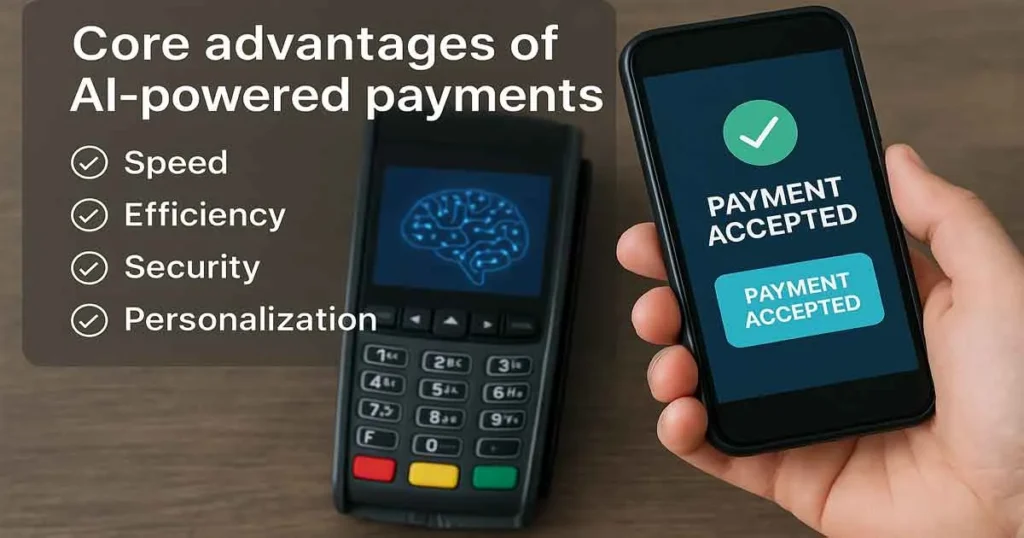
Let us understand the core advantages of these AI-powered payments in detail.
1. Speeding up Workflows
The processing speed of digital payments matters a lot because if the speed is slow, then the ratio of payment decline and failed transactions will increase significantly, which is not good for digital payment systems.
- Real-time processing and automation: AI can automate manual tasks, including data entry, invoice processing, reconciliation, routing, and approvals. Manual processes that took hours/days now only take seconds.
- Scalable payment system: During busy seasons, transaction volume surges.
AI can predict load and help scale infrastructure, avoiding downtime and delivering a more seamless payment experience.
2. Advanced Monitoring & Detection of Issues
As we all know, digital payments occur in real time; therefore, proper monitoring is essential to prevent fraudulent activity.
- Real-time anomaly detection: AI processes every transaction in real time to look for anomalies in behaviour. AI learns from historic fraud attempts and can adapt to new behaviour, which creates a robust cybersecurity defence.
- Predicting issues before they impact customers: AI systems can identify technical issues, failed routing, downed gateways, and more, before customers are affected.
This helps avoid delayed transactions and builds confidence in reliability.
3. Increased Productivity & Efficiency
AI-Powered payments are a time-saving method of payment in daily life, and they significantly increase efficiency and productivity.
- Less manual burden: Digital payments lead to automation and make the system more efficient, thereby significantly reducing the manual burden on the human workforce, as the systems automate most of the repetitive tasks, e.g. Data entry, KYC scanning, Fraud screening, Compliance programs, and Account reconciliation. This allows employees to prioritise strategy over administrative tasks.
- Improved decision quality: AI in digital payments enables highly predictive analytics, which significantly improves financial services and makes decision-making more effective.
4. Reduction of human error
Automated digital payments significantly reduce manual errors by streamlining fraud detection and processing. This is why AI systems are used in digital payments to avoid errors.
- Automated validations give an upright level of accuracy: When human teams are involved in approvals, KYC entries, or invoice matches, there is an opportunity for error, despite being reasonable.
- High compliance accuracy: AI reads and validates documents to prevent mismatches and securely verifies identities at scale.
5. Enhanced Customer Service
Artificial Intelligence chatbots would have crossed your path multiple times in digital payments. It enhances the user experience and adds a personal touch to services by monitoring behaviour, preferences, and feedback. For instance, analysing trends and surfacing preferred payment methods at checkout, or recommending the best offerings for a specific cart combination to enable the customer to qualify for the most favourable available deal.
How AI Payment Gateway Works: Under the Hood
A digital transaction is the core of an AI payment gateway. Here’s how it works:
- Transaction Initiation: The user selects the payment mode (card, UPI, net banking) and enters the required details.
- Real-Time and Risk Checking: The payment gateway calls AI modules to identify anomalies, fraud indicators, and other risk indicators.
- Dynamic Routing and Processing: AI determines the optimal terminal or route based on load, cost, success rate, and risk parameters, thereby enhancing success rates and reducing failures.
- Instant Settlement and Reconciliation: The process by which funds are settled after approval. AI reconciles, records audit trails, and merges the merchant/customer dashboard.
- Constant learning: The system will learn with each transaction, whether it is successful, fraudulent or refunded, and become more predictive of the following result.
This is the high-tech system that characterises AI-based automated payment processing in the current fintech ecosystem.
The Future: What’s Next for AI-Powered Payments

The future of AI-based payments in India is bright. Here’s what to expect:
- Real-time credit risk and fraud detection: AI models monitor transactions as they happen, flagging anomalies and reducing losses. This is a crucial consideration in developing robust AI payment systems.
- Smart routing and payment optimisation: AI determines in advance which payment channel, bank, or network will be most successful, increasing the success rate of AI payments.
- Personalised user experiences: Leveraging AI in payments enables customised checkout flows, dynamic risk scoring, and seamless experiences tailored to Indian consumers.
- Offline-online integration: With platforms like SabPaisa bringing together physical counters and online payments, artificial intelligence in digital payments will manage the unified flow.
- Voice, chat-based payments, and conversational AI: As India’s non-smartphone users and vernacular languages are increasingly adopted, AI in the payments industry will drive voice-activated or chat-based payment flows.
- Embedded finance and AI commerce: Payments become embedded into apps, marketplaces, and services. AI handles checkout and friction, supporting broader AI payment systems.
Why SabPaisa is Positioned for Tomorrow
For organisations exploring AI in payments, SabPaisa offers a robust operational foundation that aligns with India’s digital-first environment.
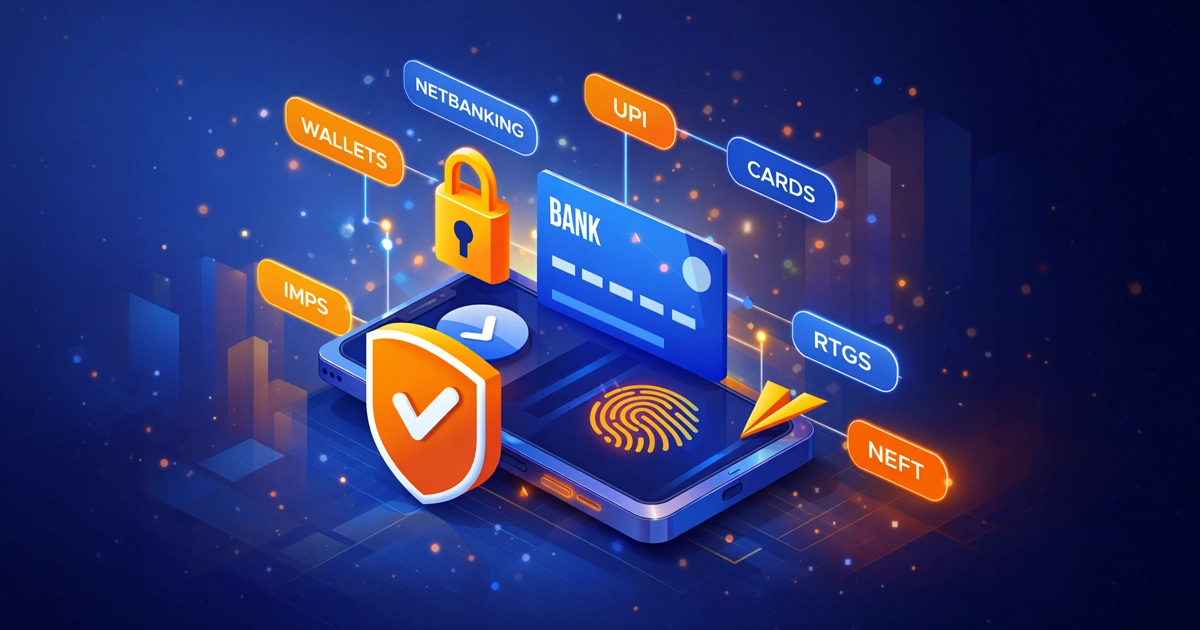
SabPaisa is an RBI-authorised payment aggregator and the world’s first hybrid payment platform, operating within a single ecosystem that combines online and offline collections. Its model supports a wide range of payment modes, including cards, net banking, UPI, IMPS, wallets, e-cash, e-NEFT, and Bharat QR, making it naturally compatible with AI-enabled payment flows that require unified, structured data.
A few reasons why SabPaisa is strategically positioned for AI adoption:
- Its hybrid online-offline infrastructure is built for large-scale transaction environments, which is essential when deploying AI models.
- Its advanced APIs can integrate with AI-based routing engines and fraud detection tools.
- Its scalable architecture enables businesses to run AI-led risk-scoring, optimisation, and monitoring models effectively.
Conclusion: The Future of AI in Payments
AI is about to make the digital payment ecosystem even more transformative. In the coming years, we will have more secure authentication, expedited transactions, connected smart devices, and new technologies that will change speed and security altogether.
SabPaisa, with its AI-powered infrastructure, is leading this digital transformation in India, offering businesses a smarter way to manage online payments and build customer trust.
As digital transactions continue to grow, one thing is clear:
The future belongs to AI-driven, intelligent payment gateways that combine technology with reliability – and SabPaisa is ready to power that future.
FAQs
1. Who benefits from AI-Powered Payment gateways in India?
- Small and medium companies: Even small traders can benefit from safe, efficient digital payment acceptance with minimal risk.
- Big e-commerce vendors: These are companies that sell in large volumes and enjoy economies of scale and reliable payment systems.
- Physical stores (stores, kiranas) that accept online payments: AI-based solutions help them deliver trust and convenience to buyers, enabling a hybrid digital-physical retail model.
2. Are there any challenges or risks with using AI-Powered Payments?
There are, of course, some considerations to make:
- Privacy and security should be provided, sensitive user information should be processed cautiously, either encrypted or tokenised.
- The AI decisions must be clear and understandable, e.g., when a payment is flagged, one should understand why.
- Complex cases (disputes, odd situations) still require human judgment; AI merely enhances it, not eliminates it.
- Compliance with regulations is essential, particularly in a controlled market such as India. Payment platforms should comply with standards, data regulations, and banking rules.
3. Is AI useful for subscription-based businesses?
Absolutely, it automates billing, predicts churn, and recommends retention offers. Many SaaS products use AI for subscription-based business models.
4. Is AI expensive to implement?
Mostly, initial costs can be high, but cloud-based tools make phased adoption affordable for most businesses. In the long term, AI implementation gives high ROI.