Table of Contents
In 2026, the checkout experience is no longer just a “payment step”; it is a direct driver of conversion, repeat purchases, and brand trust. For Indian online businesses, an ecommerce payment gateway must reliably support India-first payment behaviours such as UPI, card payments, net banking, QR-based flows, and recurring collections (for subscriptions and repeat orders).
At the same time, the compliance and risk environment is tightening. India’s digital payment ecosystem is moving towards more consistent, risk-aware authentication, with regulatory timelines that providers and issuing banks must adhere to, affecting how friction, failures, and fraud controls appear at checkout.
This guide explains payment gateway in ecommerce (what it is, how it works), what to look for when choosing an ecommerce payment gateway solution in India, and how SabPaisa’s hybrid collections approach maps to common ecommerce needs without relying on hype or unverifiable claims.
Payment Gateway in Ecommerce
A payment gateway is the technology layer that routes payment data securely between a customer, the merchant’s checkout, and the relevant banks/networks, so a transaction can be authorised and confirmed. In India’s regulatory definitions, a Payment Gateway (PG) provides the technology infrastructure for processing a payment transaction without handling funds.
A related term you will see often is Payment Aggregator (PA). A Payment Aggregator facilitates the aggregation of customer payments to merchants through one or more payment channels and then settles the collected funds to merchants.
Why this distinction matters for an ecommerce business:
- If your provider is operating as a PA, it must follow RBI directions applicable to payment aggregation (authorisation, governance, risk management, settlement/escrow expectations, and more).
- If your provider is primarily a PG, it is still expected to follow baseline technology and security recommendations even if it does not hold funds.
In practical terms, when most merchants say “ecommerce payment gateway,” they mean the end-to-end capability to accept payments and receive settlements, which typically involves PA responsibilities (directly or via partners).
Key Benefits of an Ecommerce Payment Gateway Solution
A well-chosen ecommerce payment gateway solution delivers outcomes that go beyond “accept payments”. Here are the most business-critical advantages for India-based ecommerce in 2026:
- Higher checkout completion through local payment methods: UPI remains central to everyday digital payments, enabling customers to pay directly from their bank accounts, 24/7, including QR-based experiences.
- Support for card innovation inside UPI journeys: Features like RuPay Credit Card on UPI allow customers (after linking) to pay merchants by scanning UPI QR codes, authenticated by UPI PIN, blending card credit with familiar UPI behaviour.
- Better trust and fewer disputes through a stronger security posture: PCI DSS is a widely used baseline for protecting environments that store, process, or transmit payment account data. If your gateway ecosystem is PCI-DSS aligned, it signals disciplined controls around card data handling.
- Lower risk when storing cards or enabling fast repeat checkouts: RBI defines tokenisation as replacing actual card details with a unique “token” (unique to card, token requestor, and device), reducing exposure of real card credentials.
- Operational efficiency via reconciliation visibility: Beyond authorisation, ecommerce teams need settlement reports, refunds tracking, and reconciliation workflows that reduce manual effort across finance and operations.
Many founders start by searching phrases such as best ecommerce payment gateway India, but the “best” choice is usually the one that matches your payment mix, settlement expectations, risk profile, and integration model without creating future compliance or operational debt.
How an Ecommerce Payment Gateway Works in 2026
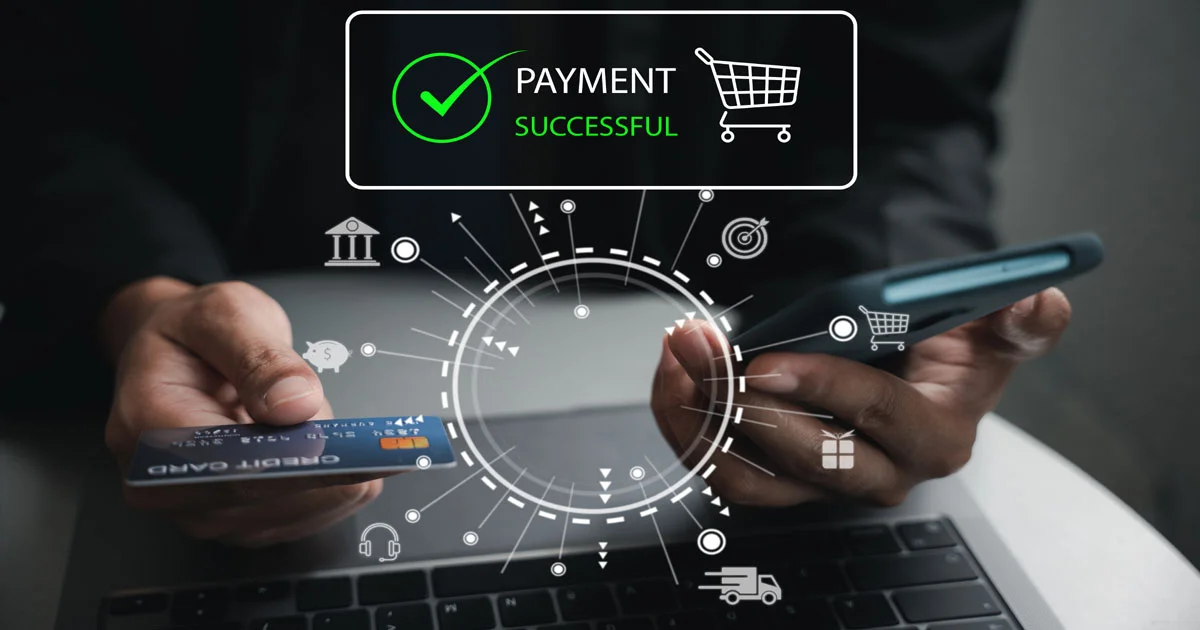
While implementations vary, the end-to-end payment flow typically follows a consistent pattern, especially for UPI, cards, and net banking.
First, the customer selects a payment method at checkout and submits payment details or approves the transaction in a payment app. Modern gateways encrypt sensitive data in transit (often via SSL/TLS at the browser/app layer) before routing to the gateway for processing.
Next, the gateway routes the transaction to the relevant bank/network path (for example, the appropriate bank rails for net banking/UPI, or card network routing for cards). The issuing bank (or payment system participant) checks authentication factors, risk signals, and availability of funds/limits before approving or declining the transaction. The gateway then returns a success/decline response back to the merchant and customer.
Finally, settlements occur to the merchant as per the provider’s settlement cycle and the applicable regulatory requirements for funds handling and settlement.
What changes in 2026 are not the “core plumbing,” but the expectations around authentication and risk controls. RBI’s framework for authentication mechanisms (with compliance timelines starting April 1, 2026) reinforces minimum standards and allows risk-based checks beyond baseline two-factor authentication, depending on transaction risk.
In practice, ecommerce businesses should treat “payment success rate” as an output of:
- Bank connectivity quality,
- Checkout UX, and
- Risk/authentication flows are not just a gateway toggle.
Use Cases for Ecommerce Payment Gateway in India
The phrase ecommerce payment gateway India ” often implies one additional requirement beyond global “accept cards”: the ability to serve customers across metros and non-metros, across mobile-first behaviour, and across multiple rails (including cash-to-digital realities for some categories).
Common India-specific ecommerce use cases include:
- D2C and brand.com stores: These businesses typically need UPI, cards, net banking, wallets, and fast refunds, plus a checkout flow that works well on low-friction mobile experiences.
- Marketplaces and multi-vendor models: A marketplace needs clean settlement visibility and often requires reliable payout capabilities (for vendor settlements, delivery partner payments, incentives, or refunds).
- Subscription commerce and repeat billing: Indian recurring collections often rely on mandate systems such as NACH/e-mandates. NPCI describes NACH as a system for high-volume, repetitive interbank electronic transactions used by banks, institutions, and government, commonly applied to collections and bulk payments.
- Omnichannel and “online order, offline pay” scenarios: Some businesses still need offline acceptance options (cash/cheque/bank transfer) tied back into a single reconciliation layer, especially for high-consideration purchases, assisted sales, or regions where customers prefer counter deposits.
SabPaisa for Modern Ecommerce Payments in 2026

SabPaisa positions itself as a hybrid payments platform that integrates online and offline collections into a single ecosystem and is an RBI-authorised payment aggregator with PCI-DSS and ISO-certified infrastructure.
- For ecommerce teams evaluating a practical ecommerce payment gateway solution, SabPaisa’s site highlights four capability blocks that map well to real-world requirements:
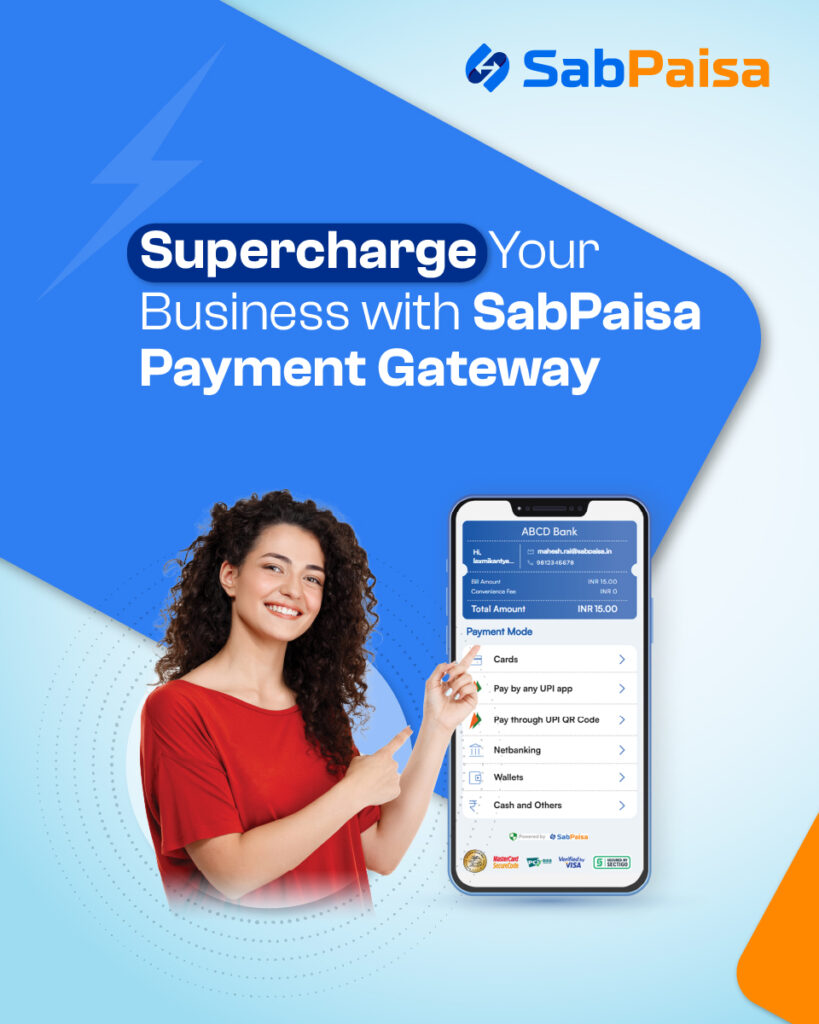
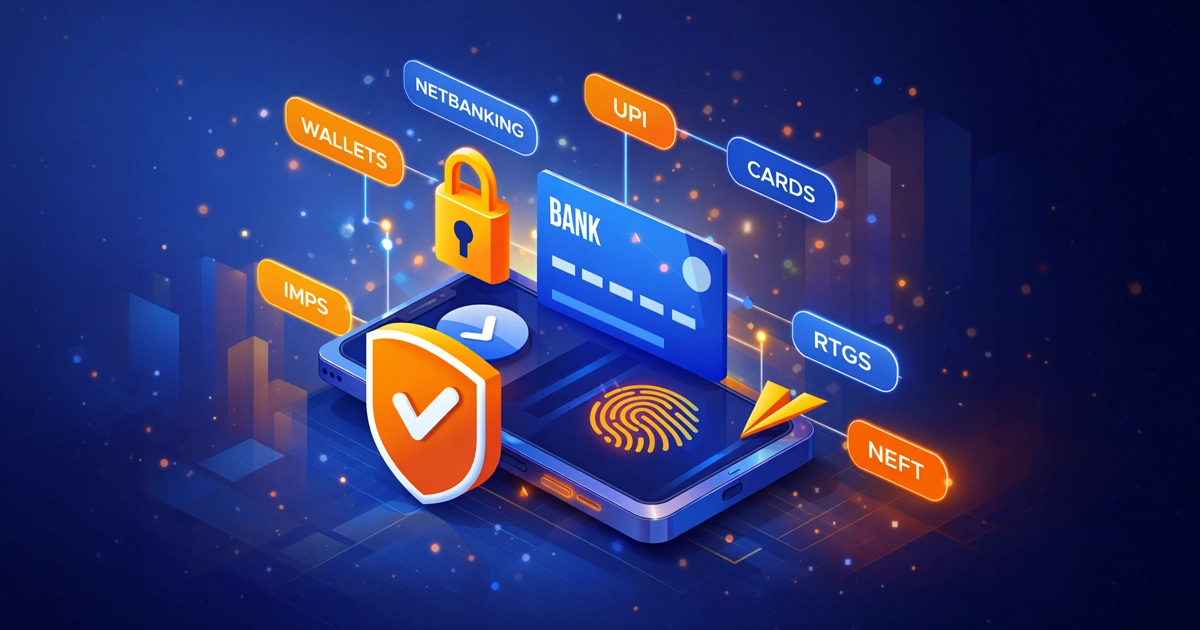
- SabPaisa’s Online Payment Gateway supports a wide set of payment modes relevant to Indian ecommerce, UPI, cards, wallets, net banking, Bharat QR, and bank transfer rails such as NEFT/RTGS/IMPS, along with NACH and offline cash/cheque deposits at authorised counters.
- For ecommerce checkout design, SabPaisa’s Ecommerce Payment Gateway page outlines flexible ways to collect money without changing your entire store architecture: hosted payment pages, payment buttons, payment links, and payment forms useful for quick launches, campaigns, COD-alternative follow-ups, or structured order capture.
- For hybrid acceptance, SabPaisa’s Offline Payments positioning focuses on enabling collections through a large authorised counter network and bank-branch routes, with transaction-level constructs such as unique virtual account numbers and date validity controls designed to bring offline payments into online-style reconciliation.
- Finally, ecommerce operations are not only about collections. SabPaisa’s Payouts API is presented as an API-based approach to vendor/customer/partner payouts, with operational controls such as beneficiary management, token-based access, and real-time transaction updates useful for marketplaces, logistics-heavy ecommerce, and refund workflows.
In short, if you are selecting the best payment gateway for ecommerce website in India, it helps to evaluate not just payment modes, but also your collection + reconciliation + payout lifecycle because that is where payment operations usually break at scale.
Conclusion
In 2026, an ecommerce payment gateway is not simply a “plug-in.” It is a risk-managed, compliance-aware layer that shapes conversion, customer trust, and day-to-day finance operations. RBI’s definitions make it clear that the roles of payment gateways and payment aggregators differ, so ecommerce teams should evaluate authorisation posture, settlement practices, and security maturity, not just pricing or feature checklists.
For businesses that want one platform to support broad Indian payment modes and hybrid collection realities, SabPaisa offers a model that combines online payments, offline acceptance options, flexible checkout flows (pages/links/forms), and payout tooling to reduce operational friction as order volumes grow.
FAQs
An ecommerce payment gateway is the technology that enables an online business to receive electronic payments safely during the checkout process by forwarding transaction information between the customer, banks, and payment networks and sending authorization/denial feedback to confirm orders.
The definitions of RBI draw a line between the two:
- A Payment Gateway is a technology infrastructure that facilitates the processing of transactions without involving the transfer of funds, whereas
- A Payment Aggregator is a service that aggregates payments and ultimately settles funds to merchants. This is important because the activity of PA is governed by RBI instructions and is accompanied by governance, risk, and settlement expectations.
Most Indian ecommerce companies require UPI (bank-account-based, common in QR and app flows) and card payments as well as net banking. You might also require recurring collections mandates (e.g., NACH/e-mandates) and operational features such as payment links to follow-ups, depending on the category.
According to Reserve Bank of India (RBI), tokenisation refers to the substitution of actual card details with a different code (a token) that is unique to the card, the token requestor, and the device. This minimises the exposure of real card data and enables more secure repeat payments in scenarios where saved-card convenience is required.
Make sure to (a) provide the payment methods that customers actually accept (UPI + cards + net banking), (b) make checkout mobile-first and low-friction, and (c) pick a provider that has a stable bank connection and visible reconciliation to ensure failures can be troubleshot quickly y. In 2026, also design more powerful, risk-based authentication behaviours in the ecosystem that have the capacity to influence approval rates and friction.