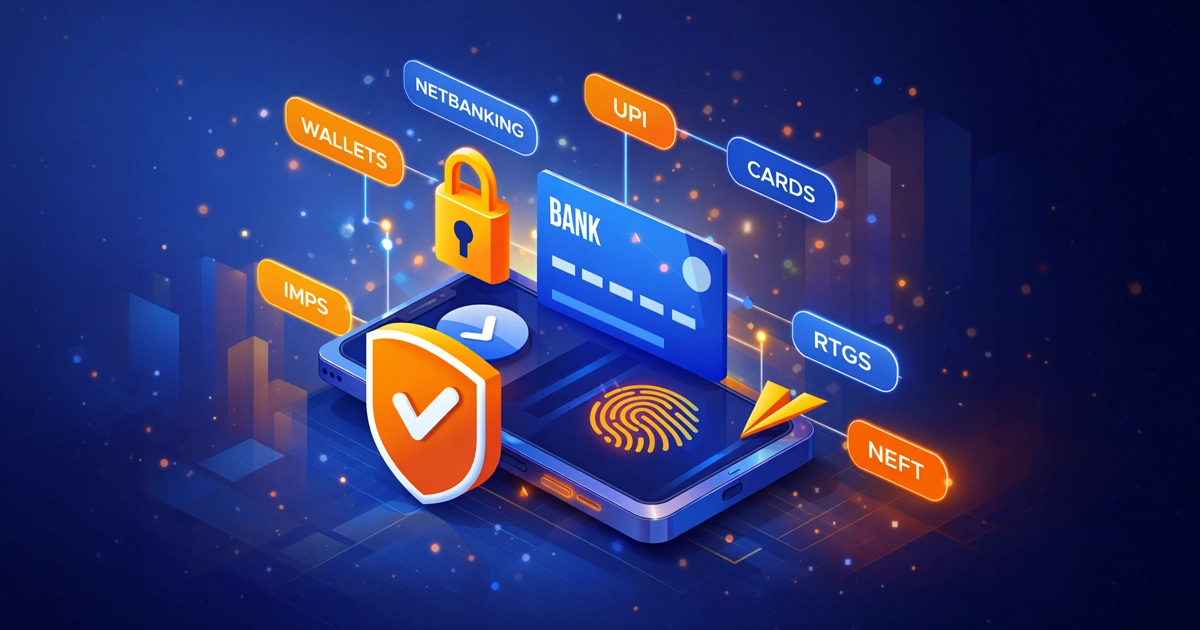
In India, the healthcare industry is one of the fastest-growing sectors in the payment technology landscape, having undergone a staggering transformation in how consumers handle their healthcare bills.
Patients are increasingly gravitating towards innovative payment technologies that offer greater convenience and consolidated bill payment. These latest technologies are geared towards mobile and e-commerce solutions such as mobile apps and card readers, digital wallets, and self-registration kiosks. The benefits of such solutions are that many healthcare organisations can provide patients with an easier, more convenient, and more secure way to pay for services while improving collections and cash flow.
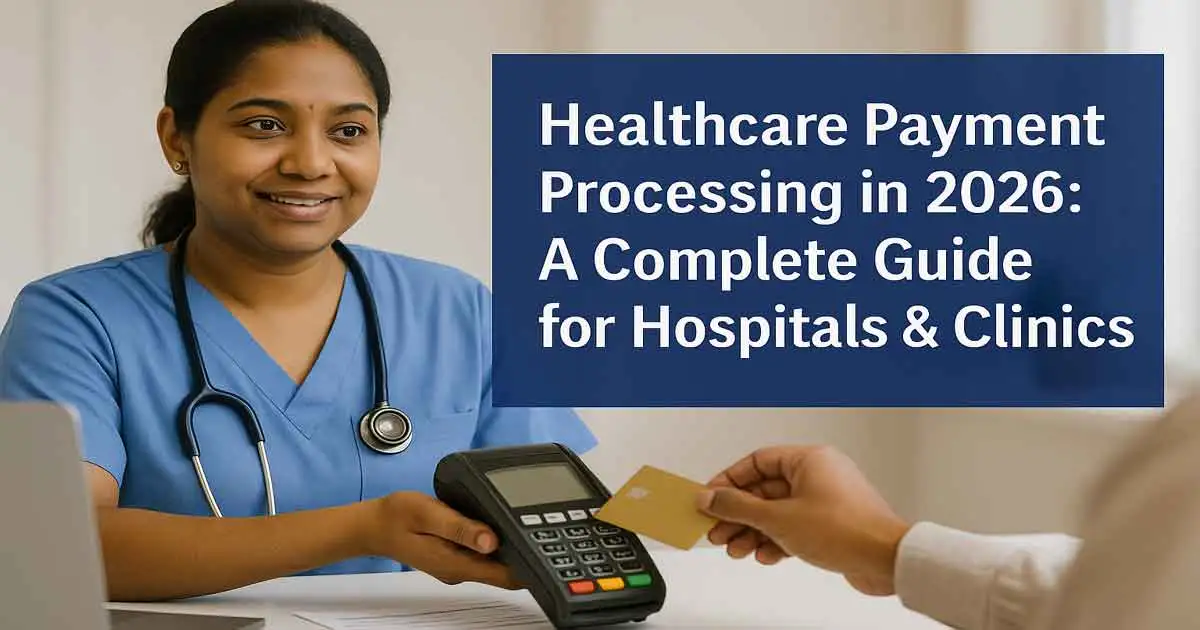
Most patients are familiar with the typical payment process at the clinic: walking up to the front desk to check in, handing over their credit card or cash for co-payments and patient balances, or receiving a bill in the mail a few days later. This traditional approach to healthcare payments is outdated and slows billing and accounts receivable processes. Not to mention, it also results in more frequent missed or late payments and increased administrative costs of having to follow up with patients.
As virtual care solutions like telehealth become increasingly popular among beneficiaries, patients are opting for secure online or mobile payment methods. While innovative payment methods are becoming increasingly accessible, let’s take a look at what modern healthcare payment processing entails, why it is vital to Indian hospitals and clinics, and how to select the best payment solutions for healthcare in 2026.
Why Healthcare Payment Processing Matters in 2026
The Indian healthcare sector is undergoing digitalisation, and payment processing has been the most affected.
Healthcare payment processing is the movement of money between patients and providers, including billing, invoicing, and final settlement, whether at a hospital counter or through an online portal.
Healthcare organisations can consolidate various payment options in one simple system to:
- Improve Operational Effectiveness: Integration reduces paperwork and reduces administration, enhancing efficiency.
- Enhance Real-Time Financial Data Access: Integrated systems provide real-time access to financial data, enabling improved decision-making.
- Reduce billing inaccuracies: A combined strategy will reduce the likelihood of errors caused by manual input, enabling more precise billing.
- Enhance Patient Satisfaction: Streamlined, open transactions improve the patient experience and simplify payment management.
- Assure Regulatory Compliance: Integrated solutions help providers meet regulatory requirements, minimising the risk of penalties.
- Streamline Cash Flow Management: Integrated payment systems directly improve financing and cash flow management.
Benefits of an Integrated Healthcare Payment System
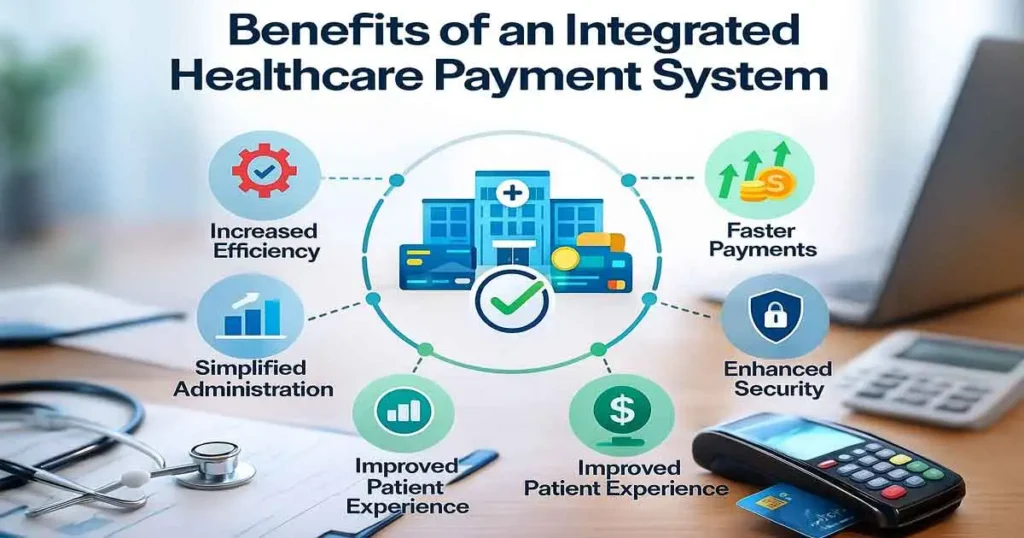
Implementing an integrated Healthcare Payment System offers numerous benefits to hospitals and clinics. Compared to scattered tools or generic retail payment systems, a solution designed to handle health care payment directly enhances operations and increases patient satisfaction:
- Lean processes and quicker collections. A combined system automatically generates invoices and accepts payments when a patient or procedure is registered. This removes manual billing, minimises delays, and reduces the time to collect payments. Hospitals with modern health care payment solutions report shorter payment cycles and fewer days in accounts receivable. Employees will save time on documentation and invest more time in patient care.
- Reduced errors and enhanced precision. Ledger entries and cash handling. Manual handling of cash and ledger entries often leads to mistakes. A unified health-care payment system automates transactions and record-keeping, so that all payments, from a 500 consultation fee to a 5 lakh surgery, are digitally documented and accurately recorded. Such accuracy upholds transparency, accountability, and proper patient billing.
- Improved patient satisfaction. The final step for a patient to a facility is typically billing, and a seamless payment procedure makes a good impression. Combined payment processing provides patients with numerous convenient options: swipe card, scan a UPI QR code, tap phone wallet, or even pay later via an online connection. SMS or email can be used to send receipts instantly. The patients can also access their payment history and invoices through a portal, which will give them confidence in the system.
- Live reporting and reconciliation. The issue of balancing cash, cards, and bank transfer payments is a serious nightmare for finance departments. An integrated system has a single real-time dashboard for updating transactions. The records appear as soon as a patient makes a payment, whether in cash at the counter or through net banking. Manual hours of work are saved through end-of-day automatic reconciliation and detailed collection reporting, enabling speedy identification of discrepancies.
- Favours recurring and high-cost payments. Healthcare is commonly linked to consistent payments for therapy or diagnostics, or to large lump sums for surgeries. Such situations are easily dealt with through integrated solutions. They will be able to retain patient data safely with their permission, automate monthly payments to long-term treatment, and provide EMI payments to patients undergoing an expensive procedure. Such flexibility keeps revenue flowing and reduces administrative costs.
- Adherence and data security. Patients need to be given data protection. Integrated payment systems include widespread PCI-DSS compliance and built-in data encryption. Compared to generic retail apps, a specialised healthcare platform limits the information leakage through role-based access control and confidentiality standards. This will reduce the chances of breach and fraud, which is reassuring to both providers and patients.
In essence, a Healthcare Payment System is integrated, and the process that used to be hectic is streamlined. It combines various payment channels in a smooth process and eliminates silos. The application in hospital and clinic settings has generally led to reduced administrative burden, increased revenue collection, and greater patient satisfaction with billing. It is a win-win case: efficiency in the provider’s operations and comfort for the patient.
Choosing the Right Payment Solutions for Healthcare Providers
Selecting an appropriate payment solution is essential for hospitals and clinics seeking to enhance their payment processes. Not every platform is equal, and healthcare has its unique needs that generic gateways may not meet. The following are key considerations for analysing payment processors in health care.
- Industry-specific: The solution has to be medical-use-oriented. Find partial payment support, in which the insurance will pay a portion of the bill and the patient will pay the rest; manage co-payments and deductibles; provide periodic billing to continue treatment; or offer instalment plans.
- Various options and offline integration: India has numerous payment methods; therefore, choose a solution that supports UPI, mobile wallets, credit/debit cards, net banking, NEFT/RTGS, cash, cheques, and electronic reconciliation. Offline payment include cash/cheque at partner bank branches/hospital counters linked to online systems. Offline integration is vital, as some patients prefer money at a bank or hospital counter. The most effective systems will capture these offline payments in the electronic record.
- Security, compliance, and trust: The provider should be comply with PCI DSS, all transactions must be encrypted using SSL, and, ideally, the provider must be an RBI-approved payment aggregator. In India, RBI permission will provide the company with the capital and audit requirements, further strengthening your confidence.
- Simple to use and integrate: The perfect solution will seamlessly integrate with your existing workflow. Find APIs or plug-ins for your site or billing application, as well as developer support and documentation. On-site support can be used to install promptly. Easy, rapid patient checkout and a low-staff dashboard will increase user adoption.
- Support and reliability: Healthcare is a 24/7 service, so your payment system should be too. Determine whether the provider has 24/7 helplines or dedicated account managers, and assess the provider’s responsiveness to issues. Losses incurred due to payment outages at critical times, such as the end of the quarter or during massive health camps, should be corrected without delay. Check the uptime and transaction success rates. To avoid downtime, a reliable system will be redundant and contain fail-safes.
- Scalability and cost: Hospitals can expand or experience seasonal overload, such as during a pandemic wave or the opening of a new clinic. The payment solution should be scalable in terms of volume and features. Cloud-based systems tend to handle sudden bursts of transactions. Inquire about any transaction restrictions and the possibility of adding new locations or departments.
By carefully considering these factors, hospitals and clinics can choose payment solutions that best suit their needs. Not only will the right choice process payments, but it will also optimise your revenue cycle and help build stronger patient relationships.
SabPaisa: Empowering Digital Healthcare Payments in India
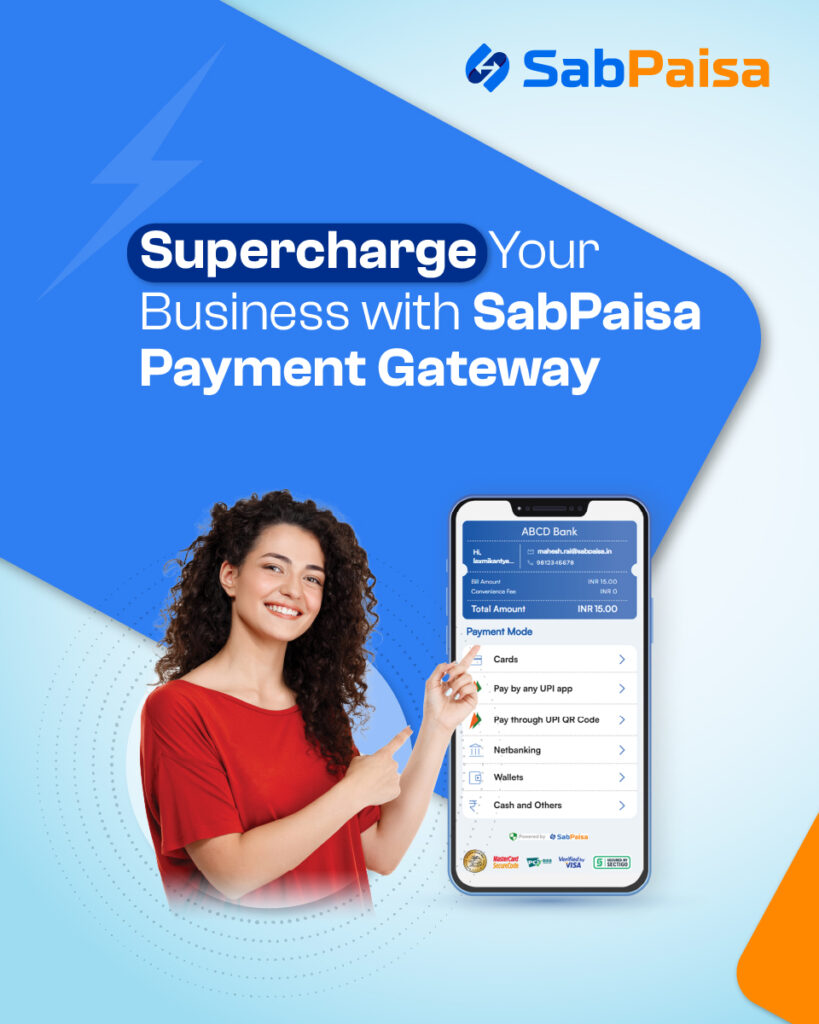
When discussing top payment solutions for healthcare in India, one name that stands out is SabPaisa. As a payment aggregator authorised by the RBI, we are India’s first hybrid payment platform combining online and offline payments, offering seamless transactions. Our omnichannel payment gateway service allows you to safely accept UPI, debit/credit cards, net banking, and wallets on your website or application.
This is why SabPaisa is the perfect solution for your business:
- Unified Payment Solution: We combine online and offline payment methods to ensure all clients have the convenience they need.
- Competitive Transaction Fees: Use relatively low, transparent charges for your business, without unnecessary hidden costs that could add to your expenses.
- Top Security Standards: SabPaisa is RBI authorised & PCI DSS/ISO certified, allowing maximum security along with regulatory compliance.
- 24/7 Customer Support: We have dedicated and hardworking customer care personnel who are always available to attend to your inquiries or complaints at all times.
- Easy Integration: SabPaisa is well-suited for integration into a website or mobile application via a basic API.
Conclusion
Healthcare Payment Systems are well-known structured models that can definitely help patients pay for their own treatments directly through channels like direct payment and insurance coverage. To amend paper-based systems, digital payments are adopted, which definitely saves time and costs. Value-based payments are considered based on the value-based services. These payments are transforming the Indian Healthcare Sector, and healthcare providers are redefining payment systems to create a better, more secure future.
SabPaisa combines compliance, security, flexible payment options, and seamless integration, making it the easiest payment gateway for hospitals, clinics, and telehealth providers alike. Whether you are a large hospital or a small practice, SabPaisa is recognised as the best payment gateway for small business healthcare operations.
FAQ’s
1. Why do healthcare practices need payment systems?
Healthcare payment systems can facilitate the billing process, enhance the patient experience, and assist practices in remaining in regulatory compliance. An effective and safe system will enable providers to reduce administrative tasks and spend more time attending to patients.
2. What are the key features of an effective healthcare payment system?
An ideal payment system has secure online payments, easy integration with practice management software, and automated billing. It must also be able to process credit cards with ease, thereby providing convenience to both patients and staff.
3. What role is AI playing in changing healthcare payment solutions?
AI improves predictive analytics and automatic payment reminders, reducing billing mistakes. It customises payment programmes, increases collection rates, and minimises defaults.
4. How do I choose the right payment gateway for healthcare transactions?
Select a PCI-DSS compliant payment gateway that accepts various payment options, integrates with your system and has fraud-prevention features. Consider charges, payment periods, and location.