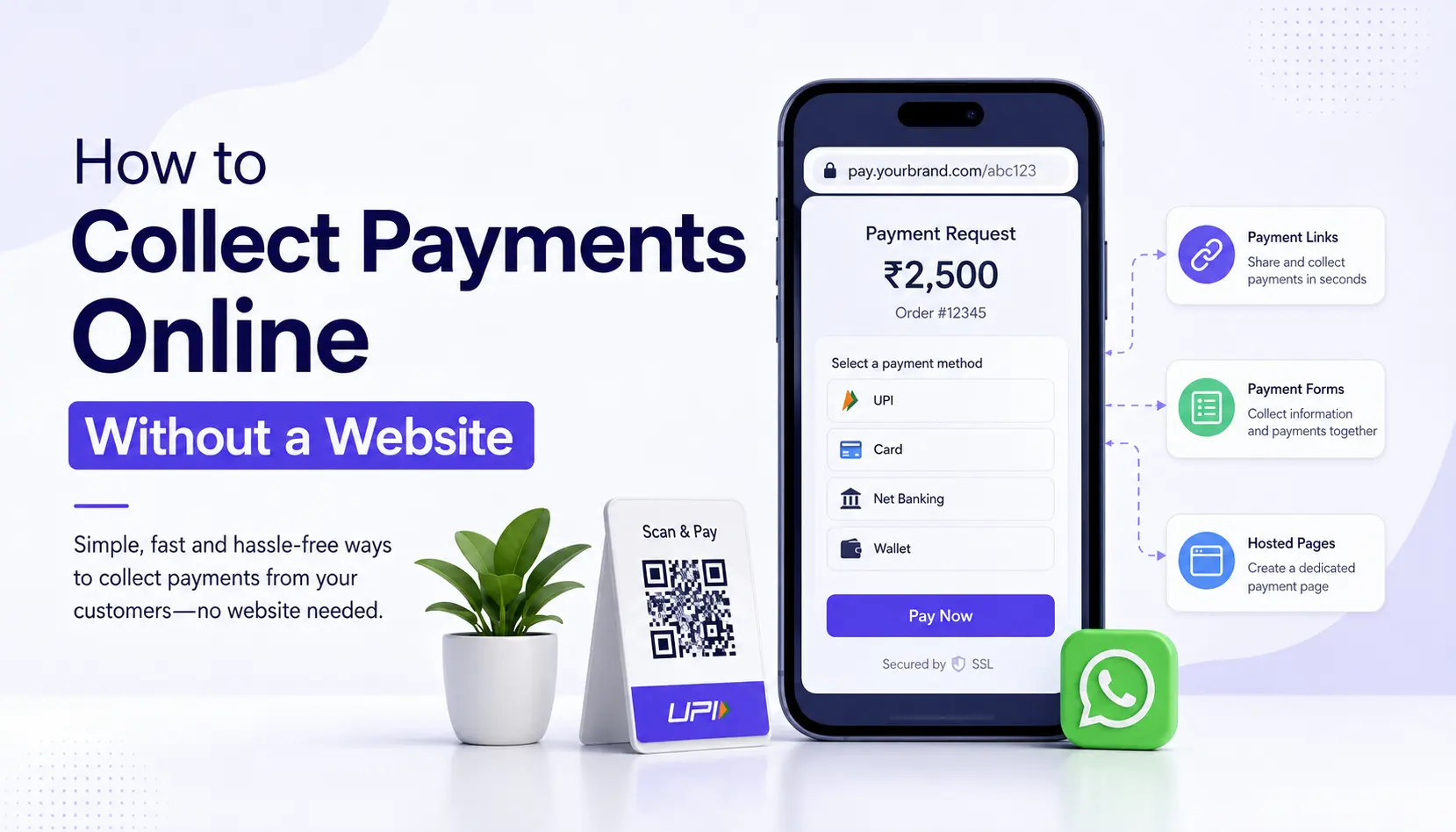


For many small and growing businesses, collecting payments online often starts with a limitation: they do not have a website. And even when they do, it may not be designed to support payments. Setting up a checkout flow can feel time-consuming, expensive, or dependent on technical resources that are not immediately available. But collecting payments online no longer requires a full website setup.
Today, businesses irrespective of their size can create and share payment requests directly with customers through channels they already use, making online collections faster and more accessible without the complexity of building a custom payment experience.
This shift is also changing how businesses think about payment collection itself. Instead of relying completely on the traditional checkout journeys, many are now adopting more flexible and operationally efficient approaches with no-code payment tools.
Why Businesses Look for Website-Free Payment Collection Methods
Not every business operates through a conventional eCommerce flow.
Many businesses collect payments through:
- Direct conversations
- WhatsApp or phone-based sales
- Service-led interactions
- Registrations and bookings
- Offline-first operations
In these scenarios, redirecting customers to a website often adds unnecessary friction.
For example:
- A consultant collecting an advance payment after a call
- A coaching institute confirming registrations
- A service provider requesting milestone-based payments
- A local business finalising orders over WhatsApp
The transaction already exists. The business simply needs a faster way to complete the payment.
That is why businesses increasingly look for payment methods that fit naturally into their existing workflows instead of forcing customers through longer checkout processes.
Ways to Collect Payments Online Without a Website
There are multiple ways businesses can collect payments online without building a dedicated website. The right approach depends on how payments are initiated and how customer interactions are managed.
Using Payment Links for Faster Collections
Payment links are one of the simplest ways to collect payments online.
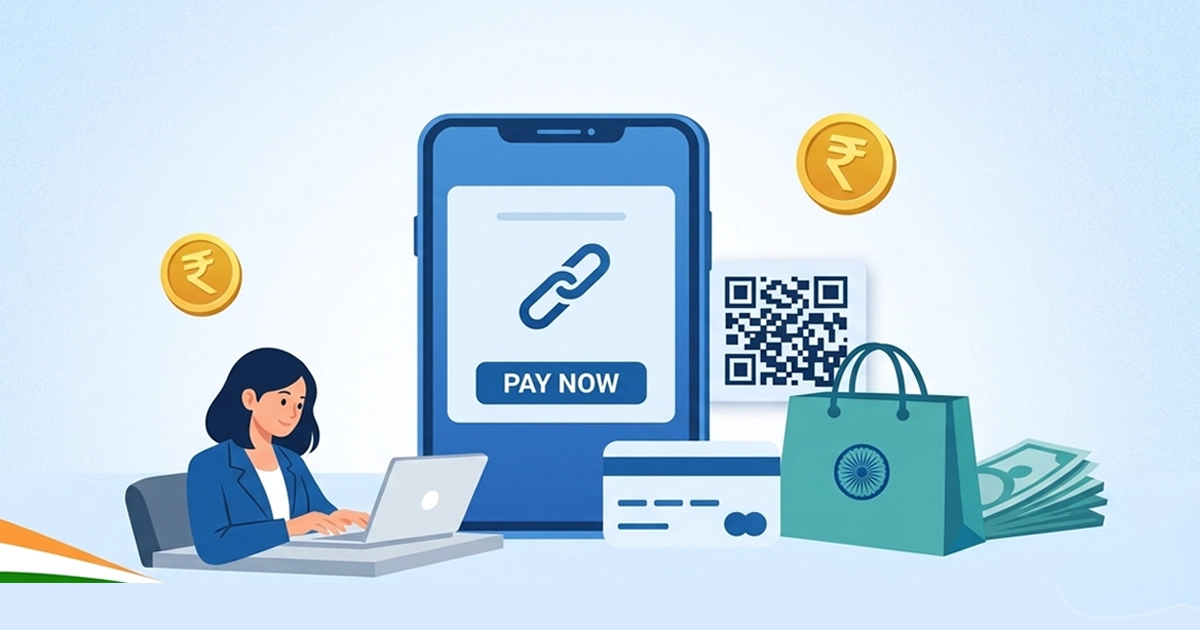
A business can generate a payment link and share it directly with the customer through WhatsApp, email, SMS, or any other communication channel. The customer opens the payment link and completes the payment in a few steps.
This method works especially well when:
- Payments are initiated through conversations.
- Businesses need faster follow-ups.
- There is no need for a full checkout flow.
Businesses can generate and share payment links for quick collections without complex setup.
For businesses that rely heavily on conversational payments, this approach significantly reduces delays between confirmation and payment completion.
To understand this model in greater detail, businesses can also explore how payment links work for businesses and where they fit best.
Using Payment Forms to Collect Information and Payments Together
In many use cases, businesses need to collect customer details along with payments.
For example:
- Student registration details
- Onboarding information
- Service preferences
- Booking data
Payment forms simplify this process by combining information capture and payment collection into a single flow.
Instead of collecting information separately and manually matching it with transactions later, businesses can streamline both steps together.
Businesses can use payment forms to collect payments along with customer details in one flow, making the process more structured and easier to manage.
This approach is especially useful for registrations, applications, fee collection, and onboarding workflows.
Using Hosted Payment Pages for Structured Payment Flows
Hosted payment pages provide businesses with a standalone payment destination without requiring them to build a website.
These pages are useful when businesses need:
- A repeatable payment setup
- A standardised payment experience
- A dedicated collection page for campaigns or registrations
Hosted payment pages provide a structured way to manage repeat payment collections while keeping the experience simple for customers.
This works particularly well for:
- Events
- Campaigns
- Registrations
- Recurring service payments
Collecting Payments Through Messaging Channels
Many businesses today operate directly through messaging platforms.
Instead of redirecting customers to a separate website, businesses can share:
- Payment links
- Payment forms
- Hosted page links
within the same conversation flow.
This keeps the customer journey shorter and aligns payment collection with how businesses already communicate.
Real-World Scenarios Where Website-Free Payment Collection Works Best
The value of no-code payment collection becomes much clearer when viewed through practical business workflows.
Coaching Institutes and Educational Businesses
Educational institutions often need to collect registration fees, admission payments, or recurring fee instalments while also capturing student information.
Using payment forms helps combine both processes into a single structured flow, reducing manual tracking and follow-ups. Businesses handling these workflows at scale can also benefit from understanding how online fee collection workflows can be streamlined further.
Service-Based Businesses
Agencies, consultants, freelancers, and service providers frequently collect payments after discussions, approvals, or milestone completions.
Payment links allow them to request payments instantly without depending on a formal website checkout flow.
Event and Registration Workflows
Managing registrations and payments separately often creates operational confusion.
Hosted payment pages and forms help businesses consolidate both steps into a single workflow, improving visibility and reducing reconciliation effort.
Small and Growing Businesses
For many growing businesses, building custom payment infrastructure early on is unnecessary. No-code tools allow them to start collecting payments immediately, adapt quickly, and scale operations without technical complexity.
What to Consider Before Choosing a No-Website Payment Method
While collecting payments without a website is easier than ever, businesses should still evaluate the operational fit of the solution they choose.
Key considerations include:
- How quickly payment requests can be created and shared
- Whether customer information can be collected alongside payments
- Payment tracking and visibility
- Ease of reconciliation
- Flexibility across different communication channels
- Scalability as payment volumes increase
The goal should not just be enabling payments, but creating a payment collection process that remains manageable as the business grows.
Choosing a Flexible Payment Collection Solution
Businesses today need payment systems that adapt to how they operate instead of forcing them into rigid workflows.
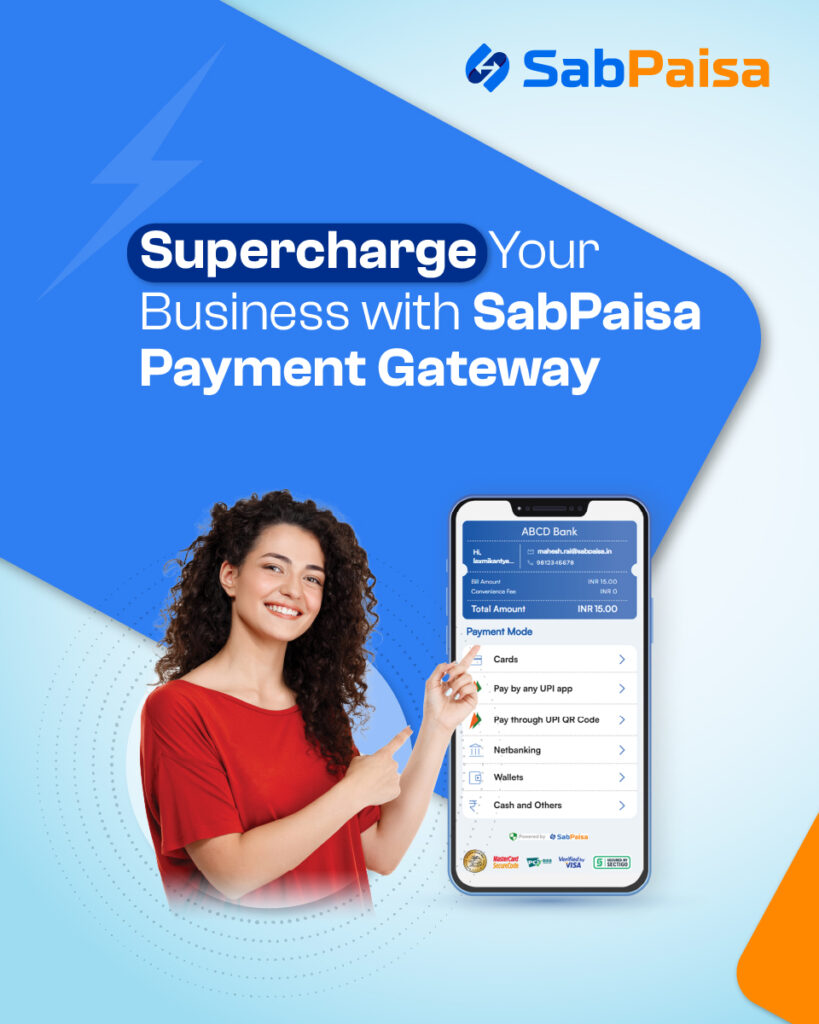
Platforms like SabPaisa support this by offering multiple no-code payment collection formats, including payment links, payment forms, and hosted payment pages.
This allows businesses to collect payments efficiently across channels without depending on complex website setups or custom integrations.
Explore SabPaisa’s no-code payment tools to simplify online payment collection without a website.
Conclusion
For many businesses, the challenge is not enabling online payments. It is removing the operational friction around payment collection.
When businesses depend entirely on traditional website-based checkouts, payment collection can at times become slower, more fragmented, and harder to manage across different customer interactions.
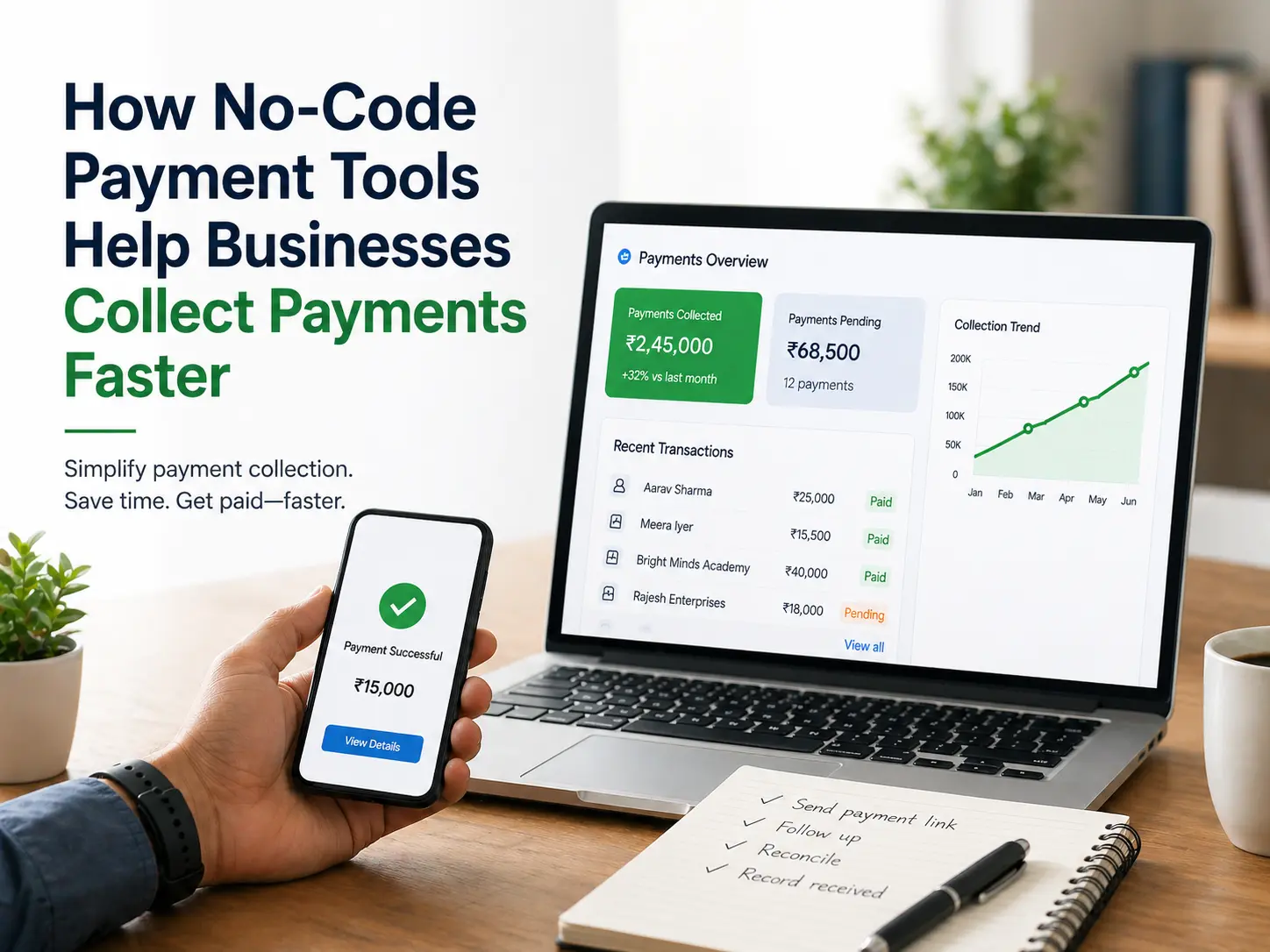
No-code payment tools simplify this by allowing businesses to create flexible payment flows that work within their existing processes instead of around them.
And as customer interactions continue shifting toward conversational and channel-driven experiences, that flexibility becomes increasingly important.
FAQs
Yes. Businesses can use payment links, hosted payment pages, and payment forms to collect payments without needing a website.
Payment links are one of the easiest methods because they can be created and shared instantly through channels like WhatsApp or email.
Yes. Payment forms allow businesses to collect customer details and payments within the same workflow.
Yes. Payment links are especially useful for small and growing businesses that need quick and flexible payment collection methods.
Yes, provided the payment solution follows proper security, compliance, and payment processing standards.