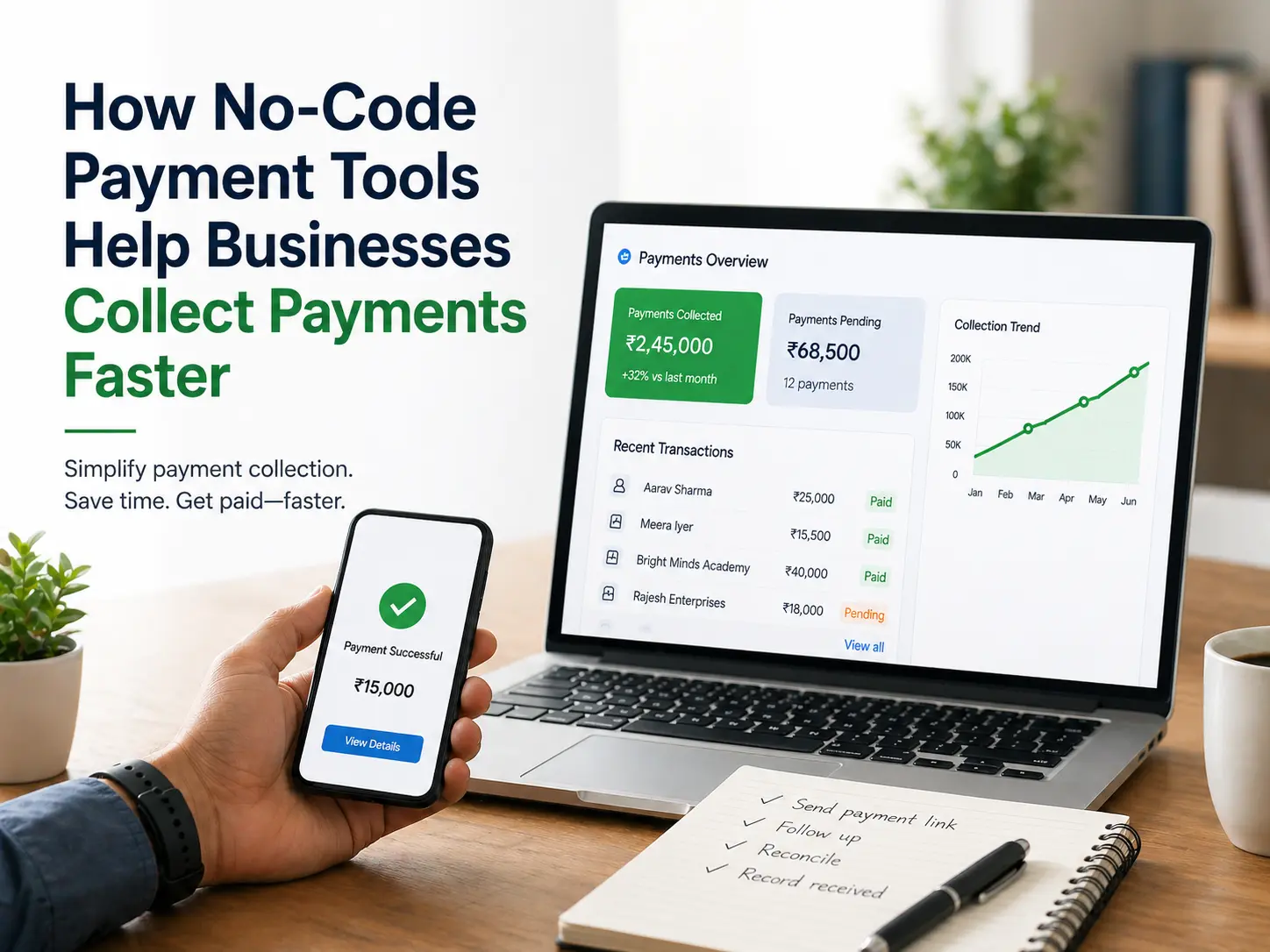


For many businesses, the challenge is not accepting payments. It is collecting them efficiently.
A payment system may already be in place for customers to pay online. But when payment collection becomes part of daily operations, friction starts to build.
Payment requests are sometimes sent manually. Follow-ups happen across WhatsApp, email, and calls. Customer data is captured in one place, while payments are tracked somewhere else. Even small changes depend on developer support.
What works at a small scale quickly becomes difficult to manage.
This is where no-code payment tools are changing how businesses approach collections by making them faster to set up, easier to manage, and more aligned with real workflows.
Why Payment Collection Slows Down for Most Businesses
Enabling online payments is only one part of the process. The bigger challenge is how payment requests are created, shared, tracked, and matched with the right customer or transaction.
In most cases, delays happen because the payment process is fragmented.
Payment requests are created one by one. Follow-ups are inconsistent. Data and payments are stored in different systems. Teams lack real-time visibility into collections. Even simple updates require technical intervention.
Let’s take an example of a fee collection scenario. The issue is rarely that the payment system does not work. The issue is that the collection process is not structured enough to ensure timely payments without constant manual effort.
This is not just a payment problem. It is a workflow problem.
What Are No-Code Payment Tools
No-code payment tools allow businesses to set up and manage payment collection flows without relying on custom development.
Instead of building payment journeys from scratch, teams can use ready-to-deploy formats such as payment links, payment forms, and hosted payment pages to start collecting quickly.
The real advantage here is operational control. Business teams can launch and modify payment flows as needed, without waiting on technical resources. This makes payment collection faster, more adaptable, and easier to scale.
Different No-Code Ways to Collect Payments
Different collection needs require different formats. No-code tools offer multiple ways to collect payments, depending on how the business operates.
Payment Links
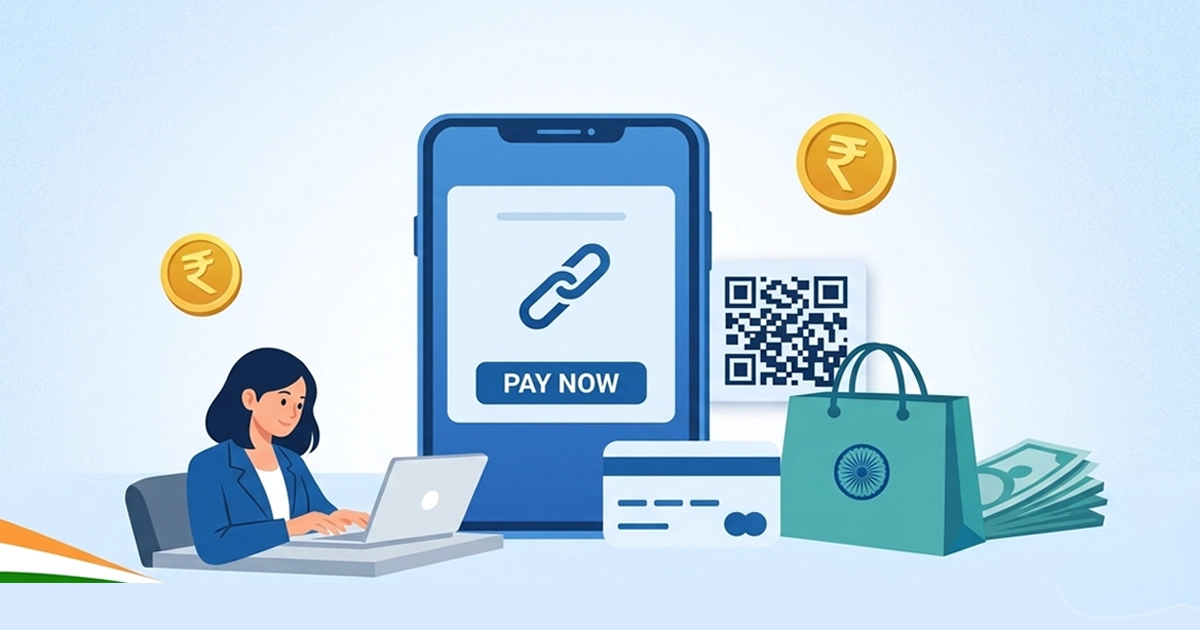
Payment links are designed for speed. A business can generate a link and share it directly with a customer, allowing them to complete the payment instantly.
This works especially well in scenarios where payments are driven through conversations such as WhatsApp, email, or direct follow-ups. Instead of guiding customers through multiple steps, the business can send a single actionable link.
Businesses can generate and share payment links for quick collections without complex setup.
For businesses looking to simplify direct payment requests, using structured payment links can significantly reduce follow-up delays and improve collection speed.
Payment Forms
Payment forms are useful when businesses need to collect structured information along with payments.
For example, a training institute collecting registrations may need details like name, course, batch, and contact information before accepting payment. A payment form combines both steps into one flow, eliminating the need to manually match data later.
Payment forms help businesses collect payments and customer details in a single flow.
Payment Pages
Payment pages provide a structured and reusable payment interface.
They are ideal for use cases like event registrations, campaigns, or standardised payment flows where businesses want a consistent experience without building a custom page each time.
Hosted payment pages provide a structured way to manage repeat payment collections.
Payment Buttons
Payment buttons allow businesses to embed payment options directly into their website or landing pages, making it easier for customers to complete transactions without additional navigation.
Payment buttons make it easy to add payment functionality directly to your website.
How Businesses Actually Use No-Code Payment Tools
The real value of no-code tools becomes clear when you look at how they fit into day-to-day operations.
Education and Training Institutes
Instead of sending payment reminders manually and tracking responses across spreadsheets, institutes can create a structured payment form with predefined fields and deadlines.
Students can fill in their details and complete the payment in one go. The system captures both data and transactions, reducing follow-ups and eliminating manual reconciliation.
Service-Based Businesses
Service providers often depend on conversations to close payments. After a discussion or approval, they need a quick way to collect money.
Payment links allow them to send a request instantly over WhatsApp or email. This shortens the gap between agreement and payment, which is where most delays usually occur.
Event and Registration Workflows
Managing registrations and payments separately often leads to confusion and extra work.
With a hosted payment page or payment form, business organisations can create a single flow where users register and pay at the same time. This ensures cleaner data and fewer tracking errors.
Small and Growing Businesses
Early-stage or growing businesses often don’t have the bandwidth to build custom payment systems for every need. No-code tools allow them to start collecting immediately, experiment with different workflows, and scale without adding technical complexity.
If your payments collection setup involves multiple steps, disconnected tools, or manual tracking, switching to a no-code setup can help streamline the entire payment process.
Choosing the Right Platform for Your Business
While many tools offer basic no-code capabilities, the real difference lies in how well they support end-to-end collection workflows.
Platforms like SabPaisa bring together multiple no-code formats, including payment links, forms, and hosted pages, along with tracking, visibility, and multi-channel collection support.
This allows businesses to move beyond isolated payment requests and build more structured, scalable collection processes without relying heavily on technical teams.
Conclusion
For most businesses, the challenge isn’t whether customers can pay. It’s how quickly and efficiently those payments can be collected. The difference often comes down to the process around the payment, how requests are created, how they’re shared, and how easily they can be tracked without adding manual effort.
No-code payment tools help with filling this gap by turning payment collection into a structured, repeatable workflow rather than a series of disconnected steps. As transaction volumes grow and operations become more complex, this shift becomes less about convenience and more about control.
And for businesses looking to reduce delays, improve visibility, and simplify how collections are managed, that control makes all the difference.
FAQs
No-code payment tools enable businesses to create and manage payment collection workflows without the need for any technical development, using formats such as payment link, form, button, and a hosted payment page.
You can use payment links or hosted payment pages and share them via WhatsApp, email, or SMS to collect payments without needing a website.
Yes, payment forms allow businesses to capture customer information along with payments in a single flow, reducing the need for manual data matching later.
Yes, no-code tools are especially useful for small and growing businesses as they eliminate the need for custom development and allow faster setup and scaling.