


Healthcare today extends far beyond diagnosis and treatment. Every patient interaction from booking an appointment to completing a consultation or diagnostic test involves a payment journey that should be just as seamless as the care itself.
Yet, for many hospitals, clinics, diagnostic centres and individual practitioners, collecting payments remains one of the most operationally challenging aspects of healthcare delivery.
Manual billing, cash payments, delayed collections, fragmented payment methods and time-consuming reconciliation often slow down cash flow while increasing the administrative burden on front-office and finance teams.
At the same time, patient expectations have evolved. They expect the convenience of paying consultation fees, diagnostic charges or treatment bills using their preferred digital payment method, without waiting in queues or dealing with complicated payment processes.
This shift has made digital healthcare payment solutions an essential part of modern healthcare operations.
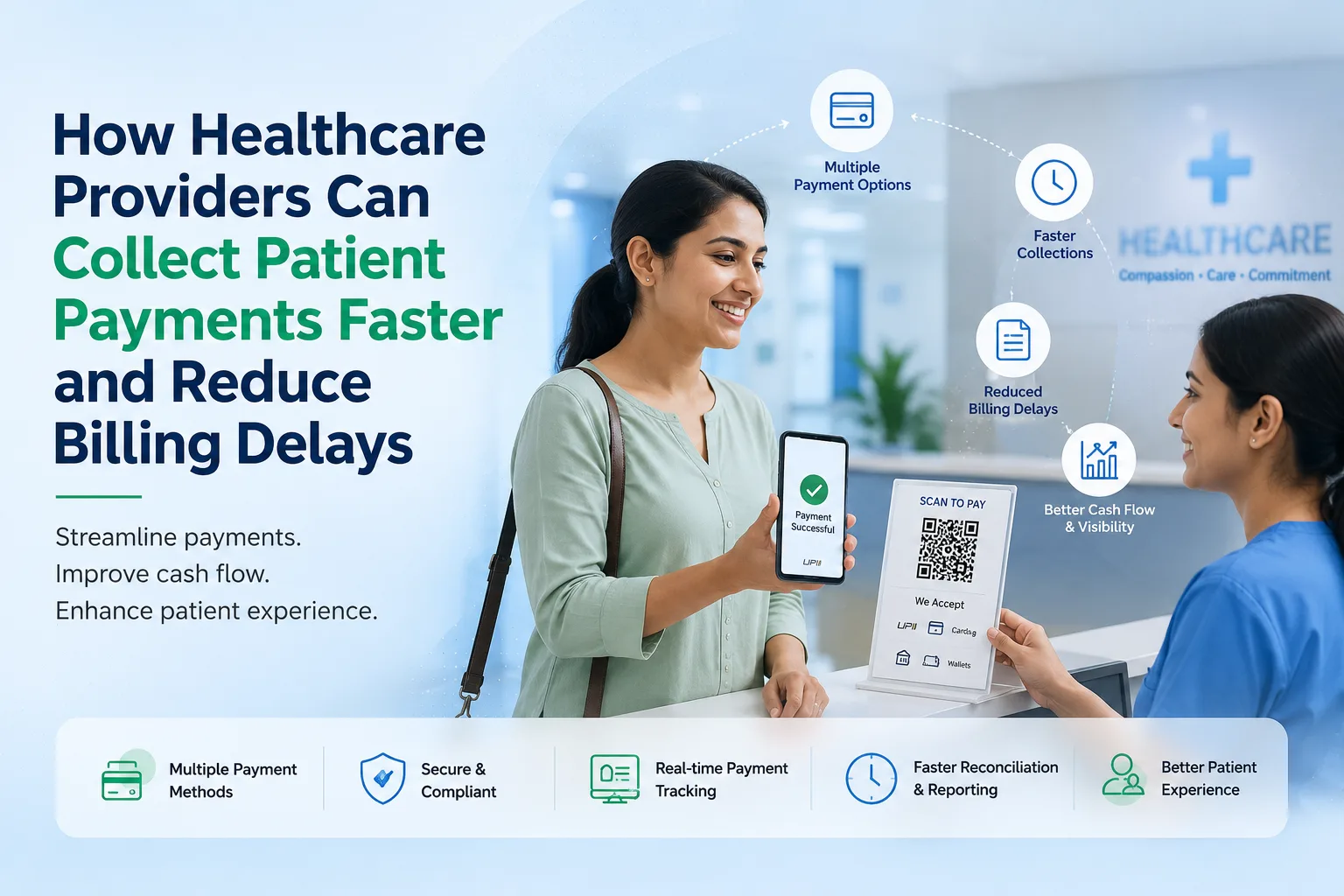
By enabling faster collections, multiple payment options and better payment visibility, healthcare providers can streamline billing operations while delivering a smoother experience for patients.
In this blog, we’ll explore why patient payments are often delayed, the operational impact of inefficient billing processes, and how healthcare providers can modernise payment collection to improve efficiency and patient satisfaction.
Why Patient Payment Delays Continue Across Healthcare
Billing delays are rarely caused by a single issue. Instead, they are usually the result of multiple disconnected processes that create friction throughout the patient journey. Whether it’s a multi-speciality hospital handling thousands of transactions each day or a small clinic managing consultations manually, payment inefficiencies can quickly affect day-to-day operations.
Some of the most common challenges include:
Manual Billing Processes
Many healthcare providers still rely on manual invoices, handwritten receipts or disconnected billing systems. These processes require staff to verify payments manually, update records and reconcile transactions separately, increasing both administrative effort and the likelihood of errors.
Limited Payment Options
Patients today expect flexibility. Some prefer paying through UPI, while others use debit cards, credit cards or net banking. When healthcare providers offer only cash or limited payment methods, it often creates unnecessary delays and inconvenience during payment.
Delayed Payment Collection
Patient payments are not always collected immediately after consultation or treatment. Outstanding consultation fees, diagnostic charges or follow-up payments often require manual reminders, increasing collection cycles and administrative workload.
Multiple Billing Touchpoints
Healthcare providers don’t collect a single type of payment.
Depending on the service, payments may include:
- Consultation fees
- Diagnostic test charges
- Health check-up packages
- Pharmacy bills
- Procedure charges
- Admission deposits
- Follow-up consultation fees
Managing these different payment categories manually becomes increasingly difficult as patient volumes grow.
Reconciliation Challenges
Finance teams often spend considerable time matching transactions across departments, payment methods and patient records. Without centralised payment visibility, reconciliation becomes more time-consuming and operationally intensive.
The Hidden Cost of Billing Delays
Billing delays don’t just impact revenue, they affect the overall efficiency of a healthcare organisation. When payments are delayed or difficult to track, the consequences extend across multiple departments.
Healthcare providers may experience:
- Slower cash flow
- Increased administrative workload
- Longer patient waiting times
- More time spent on payment follow-ups
- Greater reconciliation effort
- Reduced visibility into daily collections
Over time, these inefficiencies can affect both operational productivity and the overall patient experience.
Where Delays Commonly Occur in the Patient Journey
Patient payments can slow down at multiple stages, especially when billing processes rely on manual coordination.
Some of the most common bottlenecks include:
Appointment Booking
Patients may need to pay booking fees or consultation charges before confirming an appointment. Manual payment collection often delays confirmation and increases front-desk workload.
Consultation
Collecting consultation fees after appointments can create queues at reception, particularly during peak hours.
Diagnostic Services
Laboratory tests, scans and health packages often involve separate billing processes, creating additional payment touchpoints for patients.
Procedures & Admissions
Hospitals frequently collect advance deposits, treatment charges and discharge payments. Managing these manually can delay both admissions and patient discharge.
Follow-up Consultations
Repeat consultations and ongoing treatment plans often require recurring payment collection, which becomes difficult without structured digital payment workflows.
How Digital Healthcare Payment Solutions Improve Patient Collections
Healthcare payment solutions are designed to simplify the payment journey for both providers and patients. Rather than relying on manual processes, they bring multiple payment workflows onto a single digital platform, making collections faster, more organised and easier to manage.
Here’s how they help.
Offer Multiple Digital Payment Options
Patients expect the flexibility to pay using the method that’s most convenient for them.
A modern healthcare payment solution should support:
- UPI
- Credit Cards
- Debit Cards
- Net Banking
- Digital Wallets
- Payment Links
- QR Payments
Providing multiple payment options reduces payment friction and encourages faster collections.
Simplify Payments Across Different Healthcare Services
Healthcare providers rarely collect a single type of payment.
A unified payment solution can support collections for:
- Consultation fees
- Diagnostic tests
- Health packages
- Hospital admissions
- Pharmacy bills
- Vaccination programmes
- Wellness services
- Follow-up consultations
Managing these collections through one platform improves operational efficiency while providing better visibility into transactions.
Enable Faster Payment Collection
The sooner payments are collected, the smoother healthcare operations become.
Digital payment solutions help providers collect payments at different stages of the patient journey through secure online payment options, payment links and QR-based payments.
This reduces dependency on cash collections and minimises delays caused by manual payment processes.
Improve Payment Visibility
Finance and administrative teams need real-time access to payment information.
A healthcare payment solution should provide visibility into:
- Successful transactions
- Failed transactions
- Pending payments
- Payment history
- Collection reports
Having this information readily available allows faster decision-making & reduces time spent tracking payments manually.
Simplify Reconciliation
Reconciling payments across consultation desks, laboratories, pharmacies and multiple departments can quickly become complicated.
Centralised transaction reporting helps finance teams reconcile collections more efficiently while reducing manual effort and improving financial accuracy.
Support Business Growth
As hospitals, clinics and healthcare networks expand, payment operations become increasingly complex.
A scalable healthcare payment solution ensures providers can continue managing higher transaction volumes, additional facilities and growing patient numbers without disrupting existing workflows.
Key Features to Look for in a Healthcare Payment Solution
Choosing a healthcare payment solution involves more than comparing transaction costs.
Healthcare providers should evaluate whether the platform can support their operational requirements both today and as they grow.
Before making a decision, consider whether the solution offers:
- Multiple digital payment methods
- Secure payment processing
- Payment Links and QR Payments
- Real-time payment visibility
- Faster reconciliation and reporting
- Easy integration with existing workflows
- Scalability for growing healthcare organisations
- Reliable customer support
A solution that simplifies day-to-day operations while improving the patient payment experience delivers far greater long-term value than one chosen solely on pricing.
How SabPaisa Supports Healthcare Payment Collection
Healthcare providers require payment infrastructure that works seamlessly across different services and patient touchpoints.
SabPaisa helps hospitals, clinics, diagnostic centres and healthcare organisations digitise patient payments through a unified payment ecosystem designed for modern healthcare operations.
With SabPaisa, healthcare providers can:
- Accept payments through UPI, cards, net banking and other digital payment methods.
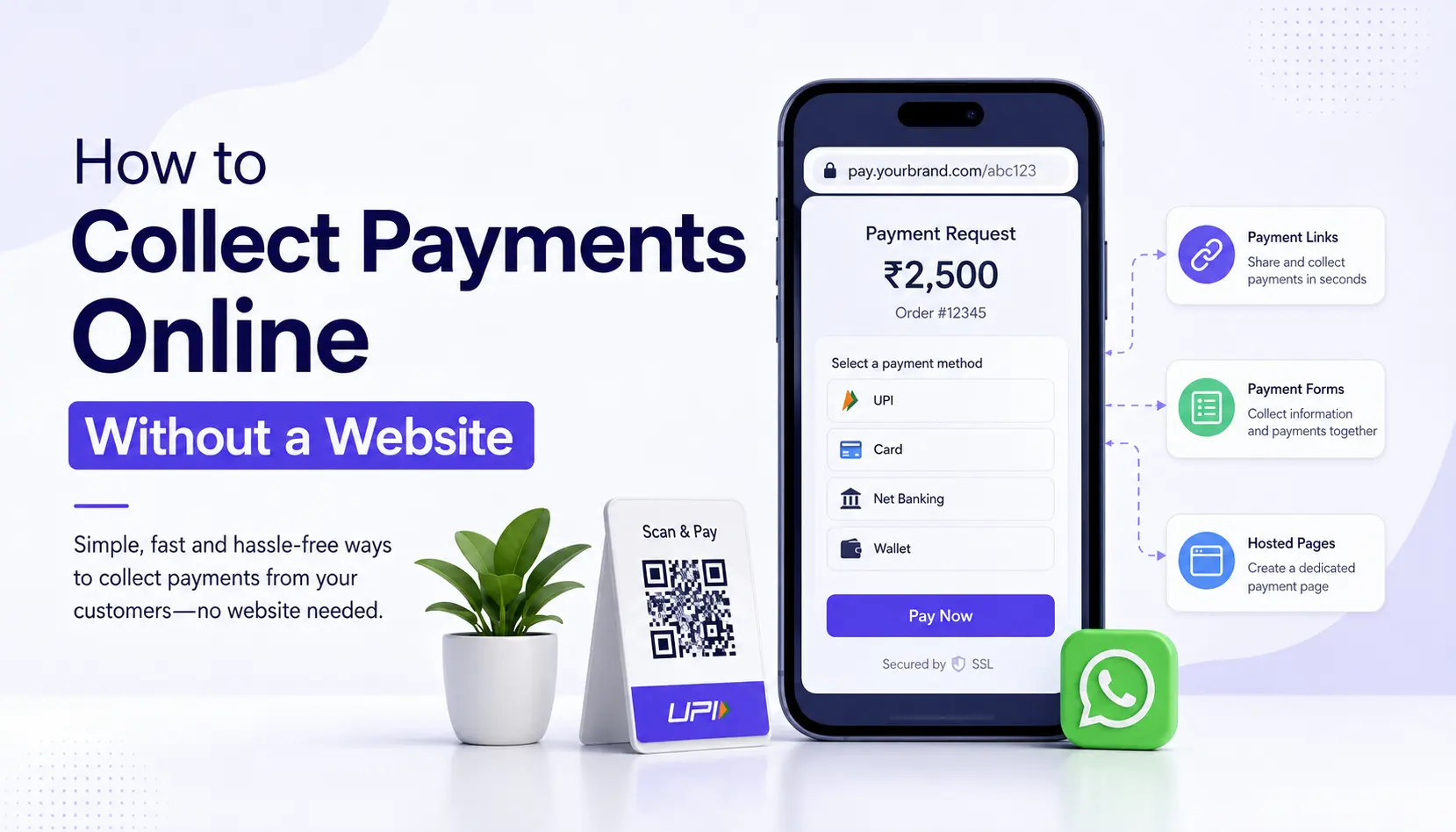
- Generate and share Payment Links for consultation fees, diagnostics, treatment charges and other healthcare services.
- Offer QR-based payment collection for faster in-person payments.
- Access transaction visibility and reporting to simplify reconciliation.
- Manage collections across multiple departments through a unified payment platform.
Rather than replacing existing healthcare workflows, SabPaisa complements them by enabling providers to streamline payment collection while delivering a more convenient experience for patients.
Conclusion
Patient expectations around healthcare payments have changed significantly. They now expect the same speed, flexibility and convenience they experience with other digital services. At the same time, healthcare providers need payment processes that reduce administrative effort, improve visibility into collections and support efficient financial operations.
By adopting modern healthcare payment solutions, hospitals, clinics and diagnostic centres can simplify patient payments, reduce billing delays and improve reconciliation without adding complexity to their existing workflows.
As healthcare continues to become more digital, investing in a scalable payment infrastructure will help providers deliver a better payment experience while supporting long-term operational efficiency.
FAQs
Healthcare payment solutions enable hospitals, clinics, diagnostic centres and other healthcare providers to collect patient payments digitally through methods such as UPI, cards, net banking, Payment Links and QR Payments while simplifying payment management and reconciliation.
Healthcare providers can reduce billing delays by digitising payment collection, offering multiple payment methods, enabling online payments, using Payment Links and improving payment tracking through centralised reporting.
A modern healthcare payment solution should support UPI, debit cards, credit cards, net banking, QR Payments and Payment Links to provide patients with flexible payment options.
Faster reconciliation helps finance teams accurately match patient payments, reduce manual effort, improve financial visibility and minimise billing errors across different departments.
Digital payment solutions make it easier for patients to pay securely using their preferred payment method, reduce waiting times at billing counters and provide instant payment confirmations, creating a smoother payment experience.