
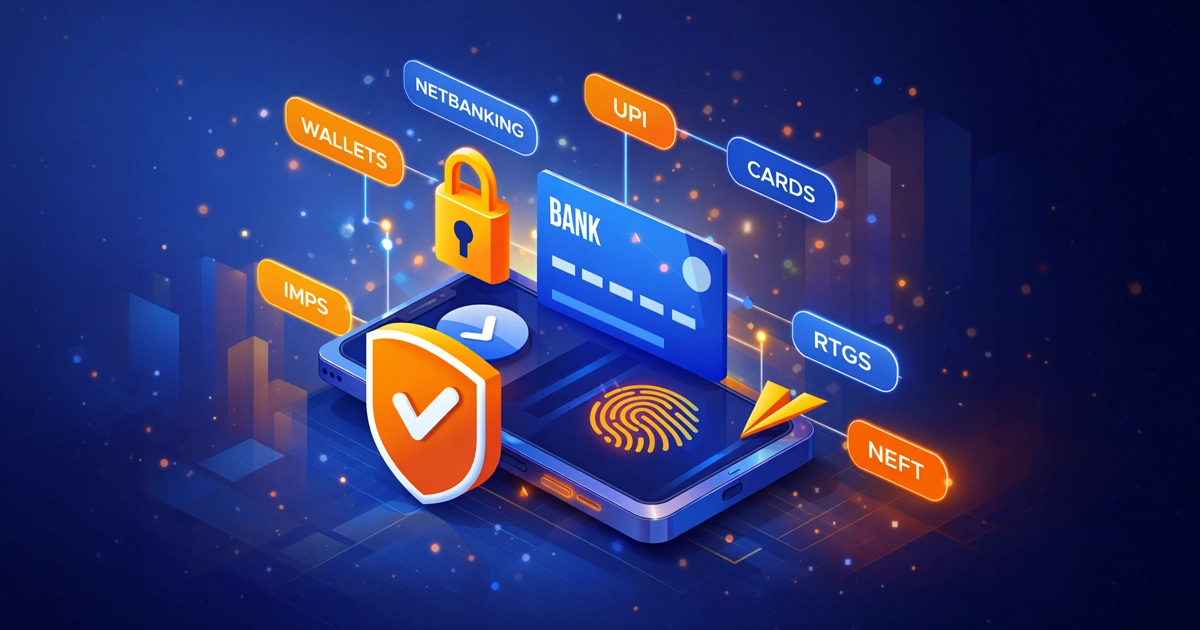

When you integrate a payment gateway into your website or application, it enables you to accept online payments. To facilitate online payments, the payment gateway service provider partners with banks and card networks such as Visa and Mastercard.
What influences the decision to choose a payment service provider: it’s market reputation, the success rate of payments, or the number of payment sources supported? According to changing market trends, many people believe that a product’s price is one of the factors that determine its quality. Choosing a payment gateway depends on factors like the Merchant Discount Rate or MDR and other associated charges.
Factors Affecting Payment Gateway Charges
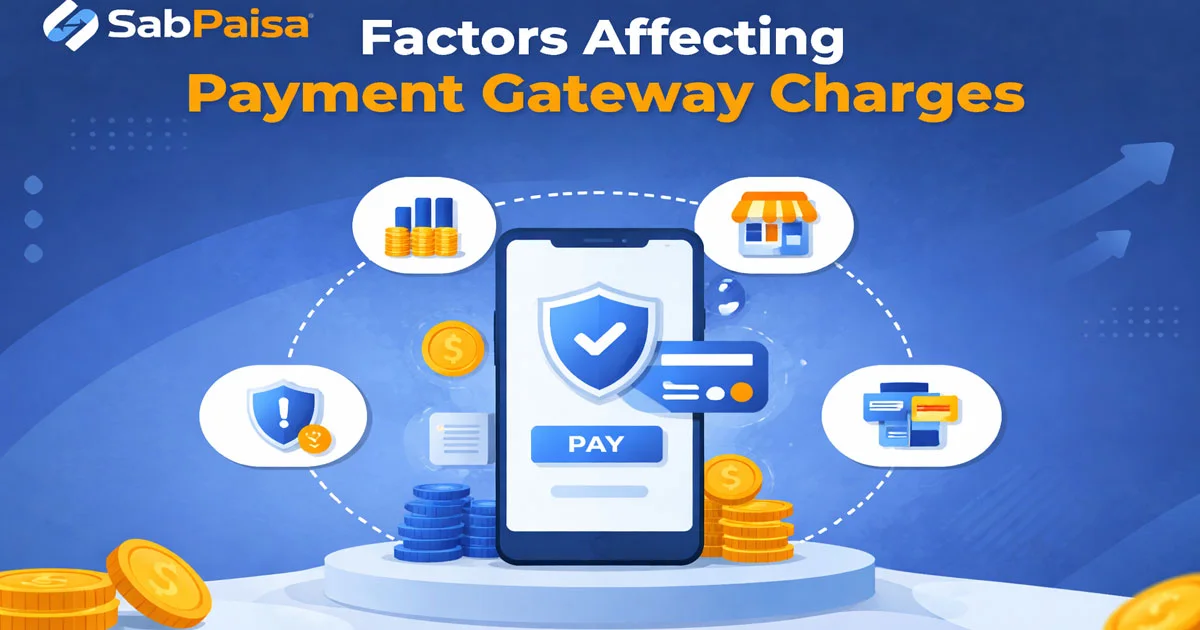
Several cost factors determine gateway fees for merchants. The Merchant Discount Rate (MDR), the percentage taken on each transaction, is the primary driver.
- MDR itself includes interchange (fees paid by banks, see next) and the aggregator’s markup. Interchange Rates vary by card type (VISA, Mastercard, RuPay, Amex) and by risk. High-risk transactions (international cards, offline sales) attract higher interchange.
- Merchant account provider fees are small extra charges from banks for maintaining accounts.
- Finally, security/risk levels influence pricing: online e-commerce carries a higher fraud risk than in-store swipes, so gateways may charge more for online payments.
In India, Indian payment gateway providers set fees based on these components. Merchants should compare offers by looking at each Payment Gateway Company in India’s fee breakdown (setup fee, TDR, etc.).
Many Online Payment Gateways in India try to be transparent, listing components like integration or maintenance charges. Ultimately, how to choose cost-effective payment gateway providers is by evaluating these factors relative to your transaction volume and payment mix.
- Merchant Discount Rate (MDR): The % fee per transaction decided upfront. Premium cards (Amex) cost more than basic cards.
- Interchange Fees: These are fees charged when making transactions by the card networks; fees are based on the type of card used and the risk involved.
- Bank/Merchant Account Fees: Banks charge small account maintenance fees or transaction fees (e.g., a monthly fee or disputed transaction fee).
- Risk/Premium Charges: The fee differs in case the transactions are online (higher risk) or offline (swipe).
Understanding these aspects will assist the merchants in negotiating and choosing the most cost-effective gateway depending on their individual sales and risk profile.
1. Merchant Discount Rate (MDR)
The merchant discount rate (MDR) is the percentage that is charged by the payment service provider when your business accepts online payment methods or debit and credit cards. MDR percents are defined before the merchant agrees to set up and use any services and, therefore, the charges are assessed on every transaction made.
MDR consists of bank fees, interchange rates, chargeback fees, point-of-sale fees, and assessment fees charged to customers and merchants who use digital payments.
2. Interchange Rate
Interchange Rate refers to the amount credit card companies like VISA, Mastercard, and Discover charge the receiving bank for every payment received by a credit card transaction.
The rate includes the transaction handling costs that are incurred by issuing banks and the investments they make to minimize the risk of fraudulent transactions. Merchants’ interchange rates are also affected by the type of card, the amount of risk associated with their business, and how they accept payments (swipe or online).
3. Merchant Account Provider Fee
Having a merchant account linked to the credit card network is a necessity for accepting credit card payments online. The merchant account lets you accept online credit card payments, and the provider deposits the received sum into your bank account regularly.
Based on the volume of transactions and type of business, the merchant account provider may charge a small fee in addition to the interchange fee. There may be a monthly maintenance fee as well as an additional fee for disputed transactions.
4. Payment Security
Customers are also charged differently based on how they use a payment gateway, be it an in-store transaction, an online transaction, a telephone transaction, etc. Each type of transaction carries a different level of risk.
For instance, receiving payments in an offline store via a card swipe machine is less risky and is assessed lower fees, than online transactions which are highly vulnerable to cyber-attacks.
Overview of Payment Gateway Pricing in India
In India, most payment gateway pricing follows a simple model: no setup fee, no annual maintenance, only transaction-based charges. Commonly, gateways charge roughly 1.75% to 2.5% of the transaction value (plus 18% GST) for domestic cards and UPI.
Higher-risk or premium methods (EMI, corporate cards, Amex) are typically around 3% + GST. All GST is applied only to the fee portion, not the full transaction. Key points:
- No Setup /AMC: No setup fees and no annual maintenance fees (AMC) on regular accounts. All the key Indian gateway service providers are currently waiving them to remain competitive.
- Main Charge (TDR): This is the platform fee.
- GST on Fee: Goods and Services Tax would only be charged on the gateway fee, but not on the entire amount. Therefore, a 2 percent fee will translate into a 2.36 percent all-in fee.
- Settlement Time: At most of the gateways, funds are settled in T + 1-3.
- Customer Support & SLAs: The best offerings usually offer support, fraud detection, and reporting as part of the platform charge. These value-adds are worth the TDR.
On the whole, the services of Payment Gateway in India can be viewed as usage-based by Indian merchants. The trick is to have the percentage charges compared and to budget with GST.
Credible gateways will emphasize their pricing terms on their websites (with example tables), to make it clear. Businesses can save money by working with an RBI-approved gateway with clear fees. Concisely, estimate plan ~[?]0 setup/AMC and budget payment charges at 2-3% of online sales.