
Fast Moving Consumer Goods, or FMCG, are low-cost items with high consumption. The best examples include household items, clothing, and food, all of which a client purchases from a retail establishment. FMCG brands include well-known and successful supermarkets like Big Bazaar, D-mart, Reliance Fresh, local food stores, and Kirana shops. Many industries contribute to the wealth generation in the Indian economy. An FMCG distributor is a middleman between the manufacturer and the retailer. A person’s job is to promote the products of a particular FMCG company that decides to distribute its goods in specific areas. The odds of becoming a distributor in FMCG vary based on the type of store chosen. Let’s look at the definition of FMCG and some of the FMCG distributorship opportunities.
Over the next ten years, Forrester Research predicts that FMCG distributorship opportunities will grow at a rate of 10–12% per year.
What is FMCG?
Simply said, a consumer good or FMCG is a finished product that is purchased by the customer. The supply and demand chain for fast-moving consumer goods, or FMCG, is extensive. This industry is in charge of manufacturing, distributing, and marketing marketable goods.
In the Asia-Pacific FMCG market average growth chart, India stands first, followed by Vietnam, Malaysia, China, and many other countries, India’s FMCG market grew at the quickest rate in the Asia Pacific in the year 2018. Over the last ten years, India’s FMCG revenue has increased by a staggering 21.4%.

Top FMCG Companies in India
The following is a list of the top 10 FMCG companies in India:
- Hindustan Unilever
- ITC Limited
- Amul
- Parle Agro
- Britannia Industries Limited
- Dabur
- MARICO LIMITED
- GODREJ CONSUMER PRODUCTS LTD.
- Tata Consumer Products.
- Emami
Top 5 FMCG Products Category
Now let’s talk about the different categories that FMCG products have as well as what category all of the products we use in daily life fall under. If you own a store or business, knowing which FMCG product categories and subcategories it fits into and which brands already have it will help you make, package, and sell your FMCG products effectively.
The top 5 FMCG products list:
- Homecare
- Personal care.
- Food & beverages.
- Alcohol & cigarettes.
- Over-the-counter products
1) Home care
A household product falls into this category due to the fact that they are typically standardized, low-durability, highly accessible, and sold at a low unit price including all home maintenance goods. According to the studies, the home care sector accounts for 11% of total FMCG products. In addition, this category of FMCG product has subcategories, such as Dishwashing, Fabric care, Surface care, Home insecticides, Air care, and Toilet care.
2) Personal hygiene
This FMCG product category accounts for 18% of the total FMCG market. This category includes goods for your body and skin, as well as products for exterior usage. Personal care products are available for people of all ages, from children to the elderly. This FMCG product category is also having subcategories, which may make it easier to identify each product which includes Haircare, soap and baths, skincare or cosmetics, dental care, and child care products.
3) Food and beverages
With a rate of 49% in FMCG, it has the largest portion. It contains a complete list of all foods and beverages.
- Foods such as Staple foods, Impulse foods, Baked foods, Convenience food, Snacks, and Dairy products, are the subcategories of the food items.
- Beverages include soft drinks, fruit drinks/juices, mineral water, tea/coffee, Virgin drinks, and healthy beverages.
4) Alcohol and cigarettes
This category accounts for 17% of the total FMCG market, which includes all types of cigarettes and alcohol.
5) OTC
These are FMCG goods that are commonly seen at medical stores and that may be purchased without a doctor’s prescription such as Crocin, paracetamol, etc. Although this category is not fully included in FMCG, its system is extremely similar to that of the FMCG sector, it accounts for 5% of the total FMCG market. For example, Dabur – Hajmola, Honitus, Shilajit, Emami – Zandu, etc.
Who is FMCG Distributor?
The distributor is the foundation of the FMCG industry. In most cases, FMCG distributors have exclusive rights to distribute a set of items in a specific geographic area. He will be in charge of product dispersion, market coverage, and retail penetration. A distributor is in charge of a certain group of customers, like canteens, motels, and restaurants.

Some of the roles that an FMCG distributor plays in the channel are:-
- Buys/stocks things in bulk from the manufacturer and distributes/sells them in small amounts to merchants.
- Receives orders from institutions and shops and guarantees that products are of high quality and delivered on time.
- Manages product inventory and the needs of outlets through their inventory.
- Provides the necessary funding to allow credit to the retail market.
- Increases both the retail market (by building additional stores) and the retail penetration of diverse products.
- Works on in-store marketing and H2H (Human to Human) promotions, among other things.
- Assists in reducing and resolving client concerns.
In this way, the distributor occupied a broad position in the FMCG industry.
What is the FMCG Distributorship Opportunities?
You can choose from a variety of FMCG distributorship opportunities, including:-
1. Traditional FMCG distributorship
In the FMCG industry, this is one of the most common ways to launch a distributorship. General stores, local grocery stores, and smaller enterprises are your outlets. The FMCG distributor purchases products directly from manufacturers and distributes them to retailers based on inventory requirements. To make sure your deliveries get there on time, you’ll need a reliable transportation system and a good place to store your goods.
2. Modern trade distributorship
Modern trade outlets are large retail venues that offer the most profitable FMCG distributorship opportunities. Breaking into this industry is difficult since large corporations already have vendors and distributors in place.
You do, however, have several options for breaking into the market. Make contact with modern trade distributors who are currently active. If you can afford to buy any unique things, you might consider looking for new FMCG distributorship opportunities to distribute them. Maintain adequate inventories, sophisticated transportation networks, and high-quality items.
3. Wholesale distributorship
These distributors specialize in perishable products such as wheat flour, pulses, rice, and other grains. These products are procured from the source and delivered to the wholesaler by a wholesale distributor. You will not work directly with retail outlets in this FMCG distributorship position.
4. Institutional distributorship
As an institutional distributor, you may opt to engage directly with institutions. Multinational corporations, railways, and other government institutions fall within this category. The most crucial benefit of exploring potential FMCG distributorship opportunities is personal monitoring. When the goods are delivered, your payment will be processed.
A distributor, rather than a retailer or wholesaler, is preferred by any FMCG company that supplies these groups. This is the best option if you have good working relationships with government agencies.
5. Super stockist distributorship
There are several distributorship opportunities in FMCG, both in urban and rural areas. Super stockist distributors are responsible for supplying FMCG firm products to rural minor distributors. They then deliver it to retail outlets.
Super Stockist distributorship opportunities make you the primary source of commodities for these FMCG sub-stockists. For FMCG distribution to rural areas, having your godown at the district headquarters is perfect.
How to become an FMCG distributor in the Indian FMCG Industry?
A corporation will typically appoint only one distributor in a specific city. Anyone interested in becoming a distributor should look for parts from a vacant company. A person’s profile can be shared with company personnel so that if an opportunity arises, it can be provided to the appropriate person.
In most cases, businesses will look for a firm’s or individual’s previous experience in FMCG distribution. If you have prior experience, it will be easy to build a case. It is advisable to have a partner if someone does not have prior experience in that field since this will add value to the firm and enhance the argument. This is an excellent idea for someone who is starting an FMCG distribution company for the first time. Getting a bigger business or a distributorship with a well-known company can be difficult if you don’t have any experience. A distributorship with a smaller company/brand might suffice.
What does it take to become an FMCG Distributor?
Multiple meetings happen before a corporation decides to select someone as a distributor.
- The most significant prerequisite is the ability to invest in the company. If someone wishes to work as a distributor, they should be able to invest the same amount as the monthly turnover.
- After finances, the second requirement is FMCG experience. Prior experience can help you keep your business running smoothly. Relationships with market retailers are critical for business growth.
- As part of the service to retailers, all orders are collected, whether or not they are delivered the next day. When a distributor fails to fulfill orders, the company’s image suffers, and merchants stock items from competitors, resulting in a market share loss.
- In the marketplace, a distributor should be willing to give credit; this will benefit the distributor as well as increase sales.
- A distributor must set up a warehouse, hire salespeople to take orders from the market, rent a vehicle to deliver things to the market, and charge and distribute bills to merchants using a computer system.
Digital Payments in FMCG Distribution: Why a Reliable Gateway Matters
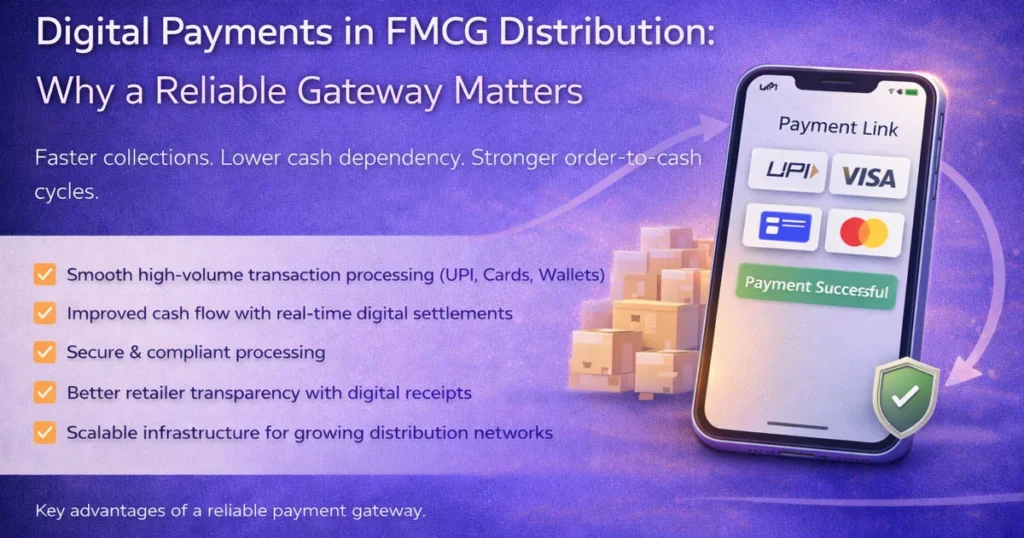
In the FMCG distribution, where distributors mediate FMCG brands and retailers and where high-volume and frequent transactions, which must now adopt digital payment methods, are prevalent. A reliable Payment Gateway In India means that distributors have quick and secure payments to collect and it helps minimize the use of cash, as well as improving order-to-cash cycles.
As the Indian market is rapidly changing into a digital market, businesses in the FMCG sector that enjoy superior payment systems are at an advantage to experience quicker settlements, reduced transaction failures and better transparency.
The collaboration with established Online Payment Gateways In India will allow the distributors to add automated digital checkout features to their ordering systems and mobile sales applications, facilitating the financial processes within a competitive sector.
Key advantages of a reliable payment gateway:
- Smooth transaction processing: Accepts credit/debit cards, UPI, and digital wallets to make faster payments across all touchpoints.
- Improved cash management: Real-time digital transfer of cash enhances cash flow forecasting and postpones the associated costs with cash collections.
- Safe and compliant processing: The collaboration with reputable Payment Gateway Companies in India will guarantee compliance with various regulations and data security.
- Enhanced retailer experience: Tracking real-time settlement and providing digital receipts enhances retailer confidence and business reuse.
- Scalable infrastructure: Indian Payment Gateway Providers are capable of accommodating the increased amount of transactions as the FMCG distribution networks grow.
Why FMCG Businesses Prefer Payment Aggregators
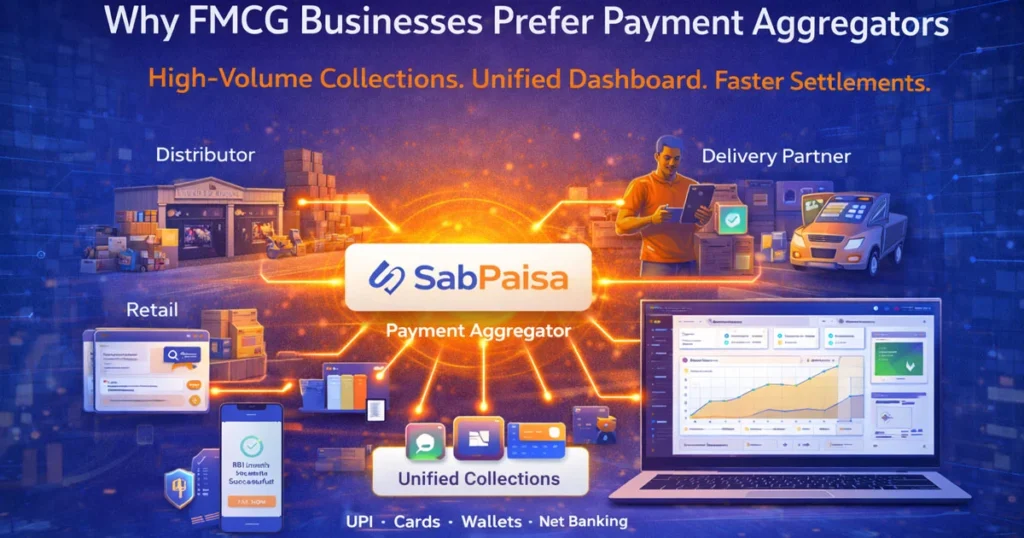
Brands and distributors of FMCGs tend to deal with large volumes of daily transactions with retailers, wholesalers, and delivery partners. Rather than making a series of bank integrations, many FMCG companies use one Payment Aggregator, a single platform that simplifies collections and settlements with a variety of payment options.
A payment aggregator makes it much easier to onboard, to eliminate compliance nuisance, and to display all payment flows in one dashboard, which is well-suited to supply chains that need to move quickly. Aggregators are third-party intermediaries that collect payments on a single master account, are involved in settlement operations and help to bypass the technical complexity of establishing direct merchant accounts with financial institutions.
Benefits FMCG businesses gain from payment aggregators:
- Easy onboarding: Fast merchant onboarding without direct bank merchant accounts.
- Unified collections: Upi, accept cards, wallets and net banking on a single contract.
- Fraud/risk mitigation: Aggregation offered by RBI -regulated entities is safe and compliant.
- Operational savings: Not as technical as operating individual gateways and banks.
- Scalability & support: Scaling up the volumes of transactions is easily achieved with an increase in the FMCG sales.
Top aggregators in the country support holistic payment experiences, and FMCG players increasingly choose Top Payment Aggregators In India to ensure reliable, high-uptime digital collections.
One-Stop Payment Solutions for FMCG Supply Chains
The process of managing money flows in the FMCG distribution channel requires comprehensive payment mechanisms that extend beyond mere check out tools. One-stop payment platforms integrate various services provided by online payment processing to pay, invoicing and reconciliation in one ecosystem business can depend on.
These One Stop Payment Services assist FMCG organizations in removing silos among sales, finance and operations that can allow them to observe real-time cash flows and minimize manual interventions. Modern Payment Solutions will accommodate both online and offline payment options and allow distributors to receive payments in different formats and automatically reconcile between channels.
Key capabilities of integrated payment solutions:
- Single dashboard: Track collections, settlements and payouts.
- Multi-mode acceptance: Acceptance of cards, wallets, UPI, payment methods, which are business-specific.
- Automated reconciliation: Compares transactions with orders without computer entry.
- API-based workflows: Direct interface to internal supply-chain, ERP, and finance.
- Improved reporting: Real-time analytics are used to predict demand and payment optimization.
One Stop Payment Solutions platforms allow them to be more efficient in operations, and allow FMCG operators more time to work on distribution, shelf-reach, and customer relationships.
Choosing the Best Payment Gateway for FMCG Collections
Once the distributors or brands of FMCG choose a digital payment provider, some aspects define the reliability of success transactions, security, ease of integration, and the support of partners.
In order to determine Which Is The Best Payment Gateway In India in respect to specific FMCG business, distributors are advised to focus on provider based on such factors as speed of integration, uptime of transactions, quality of customer support, and transparency of pricing.
The Top Payment Gateway India solutions are flexible in their APIs, cover a wide range of payment options, and have features to facilitate recurring/bulk collections.
What excellent payment gateways provide:
- High security and compliance: Meets PCI DSS standards and RBI guidelines.
- High success rates: Reduced failed transactions during peak FMCG order cycles.
- Scalable infrastructure: Processes the high daily volumes without failure.
- Clear pricing: Well-defined fee structures with predictable MDR and settlement conditions.
- Technical support: Responsive Merchant Support and developer resources.
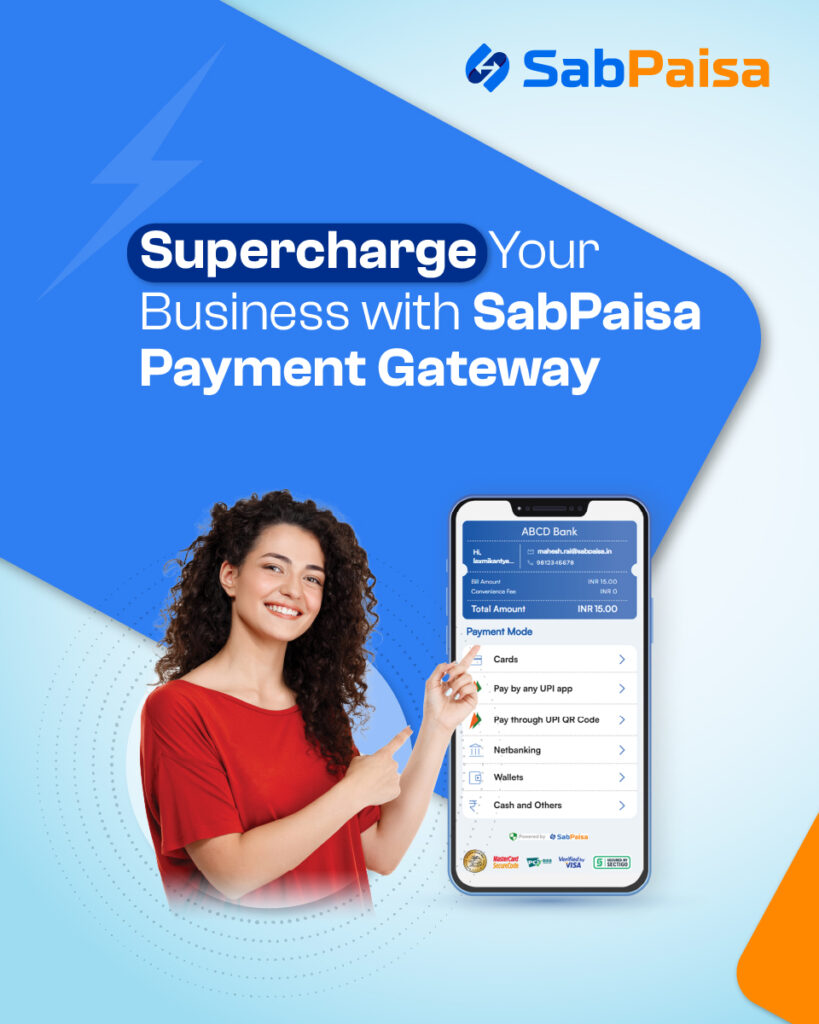
Collaboration with a reliable Payment Gateway Company in India or a Payment Gateway Provider in India, such as SabPaisa, assists FMCG companies in streamlining their payments, lessening friction during checkout, and keeping their financial operations robust.
Payment Gateway Integrations for FMCG Retailer Apps
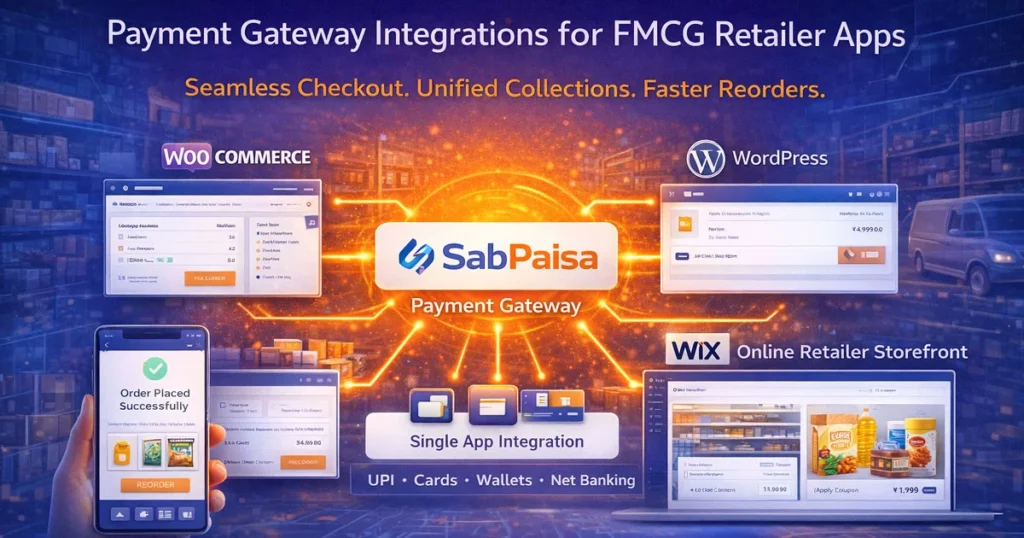
With brand building and distribution of FMCGs relying on the use of digital tools to access retailers and the final-mile customer, it is important to consider the implementation of payments within their applications. An adaptable ecommerce payment gateway allows FMCG companies to receive payments within web portals or mobile applications, facilitating the purchase and reorder processes. Platform-specific integrations can be used in retailer platforms that are based on popular technologies:
- Woocommerce payment gateway: Stores and direct ordering portals built on WooCommerce.
- WordPress payment gateway: Provides easy checkout on the WordPress-based business sites.
- Payment gateway for Wix: Allows secure online payments to Wix-based retailer sites.
Such integrations assist FMCG companies in providing relationships of consistent, safe checkout processes across channels, decreasing cart abandonment, and enabling a variety of payment options within a single application.
Instant Payouts & API-Based Settlements for Suppliers
An FMCG supply chain involves managing supplier and partner payments that need to be fast, accurate, and automated. Instant payout solutions enable distributors and FMCG brands to pay funds to vendors, field employees or to partner retailers in a quicker manner without using manual banking and long queues.
A payout API allows enterprises to incorporate payout systems into their internal frameworks such that payment occurs automatically when reconciliation or order confirmation is done. The API-driven settlements minimize errors, increase transparency, and build trust with suppliers by ensuring that funds are received on the recipient side in real time.
Why instant payouts and API-based settlements matter:
- Real-time disbursements: Transfer of funds is immediate instead of days of being processed by the bank.
- Automated workflows: A payout API eliminates manual work and speeds up supplier reconciliation.
- Scalable operations: Best when dealing with large volume payments that involve numerous partners.
- Better relations: Reliable payments create confidence and loyalty among suppliers.
Instant payout-supporting platforms and API innovations enable FMCG players to enable the optimization of cash flows and competitive supply chain operations.
Payment Links for Quick Retailer Collections
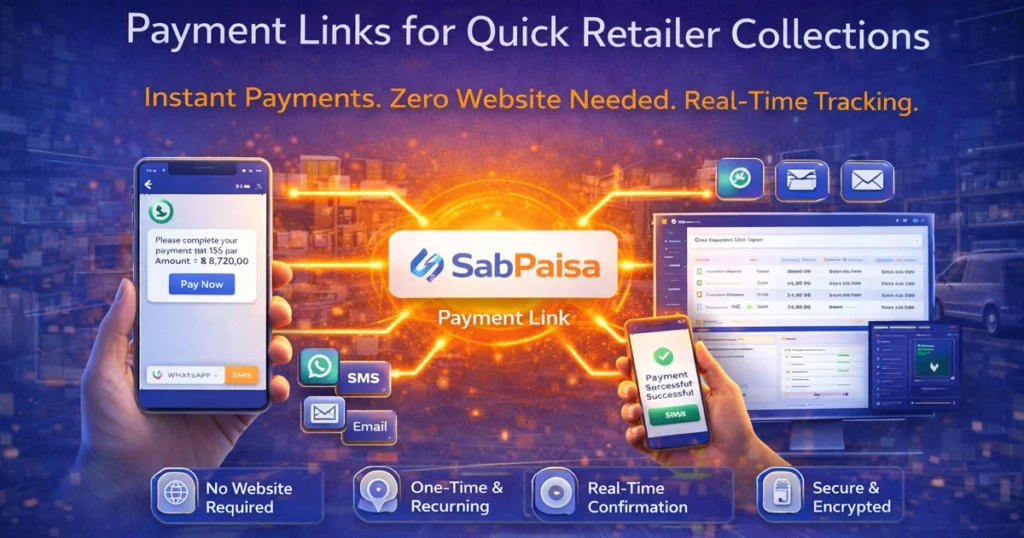
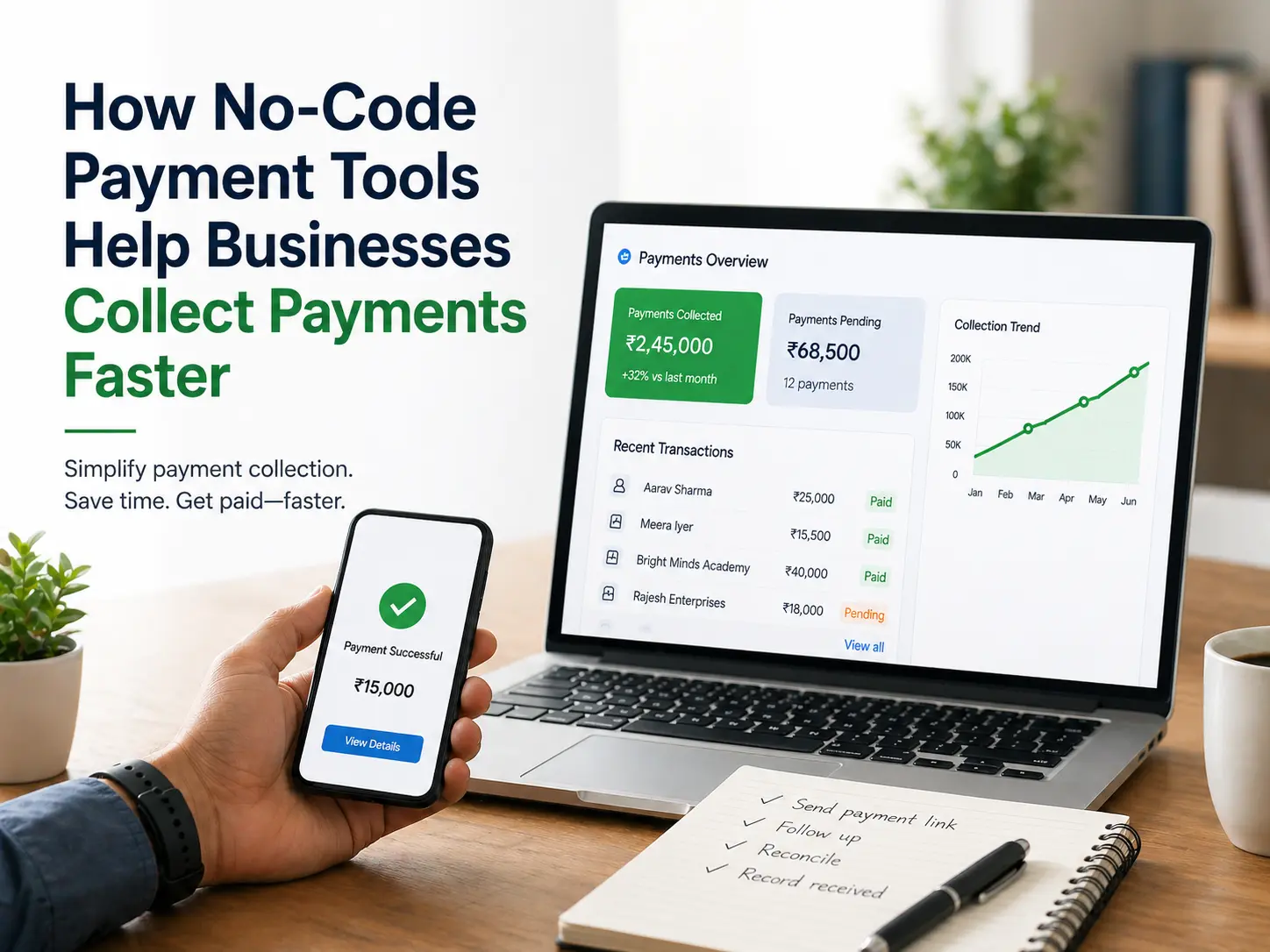
Retailer payments to distributors located in various markets can be time-consuming, particularly for small distributors who lack ecommerce portals. Payment links provide a new way to replace invoice follow-ups or visiting in person; a business can create a payment link that a retailer can use to pay immediately. This does not need a complete site and is compatible with phones and messaging applications, making it a perfect fit within field sales teams and rural partners.
A payment link generator generates payment links that are secure and shareable and include payment information pre-filled, making the payment experience easier and enabling distributors of FMCGs to receive payment faster.
Benefits of payment links for quick collections:
- No website required: Links can be shared via WhatsApp, SMS, or email without a checkout page.
- Simple installation: Retailers can receive an instant payment by clicking and paying in real time, which enhances cash flow and saves collection time.
- Flexible usage: Ideal to make a one-time or recurring payment to retailers.
- Trackable payments: Track link payment status and usage in a reconcile and report.
Secure payment links allow FMCG distributors to modernize collections, decrease cash dependence, and enhance their overall financial flexibility.
Conclusion
You can use any distribution method if you have a good business strategy. There is a variety of appealing FMCG distributorship opportunities, with options for businesses of all sizes. Nonetheless, it is now one of India’s most competitive industries. If you plan wisely and start as soon as possible, you may reap the benefits for the rest of your life.
FAQs
1. What is FMCG?
Ans: FMCG is an acronym for “Fast Moving Consumer Goods.” The FMCG industry involves items that sell quickly for a low price.
2. What are the different types of FMCG?
Ans: Industrial or non-industrial goods that are widely consumed and regularly supplied at a reduced retail price are referred to as FMCG items. Durable goods, non-durable goods, and services are the most common types.
3. What is the size of the Indian FMCG industry?
Ans: In 2020, India’s FMCG market was worth 110 billion dollars. The market for fast-moving consumer goods has increased since 2012. The market is about to reach $220 billion by 2025.
4. Do you need a license to work as an FMCG distributor?
Ans: Yes, a license is essential before one can start making money as an FMCG distributor. They need to register their business according to state law. After that, they must obtain a license from the FMCG maker in order to market their products. As a result, distributors will have a contract with the FMCG manufacturers they choose.
5. What are the FMCG product categories?
Ans: There are 5 major categories in FMCG such as Homecare, Personal care, Food & beverages Alcohol & cigarettes, and Over-the-counter products.